Tres miembros de TUNACONS reconocidos por su aporte a los ODS // Three TUNACONS Members Recognised for Their Contribution to the SDGs

¡Buenas noticias para la pesca sostenible en Ecuador! 🎉

La revista Vistazo y la consultora Ypsilom publicaron el ranking de las 50 empresas que más aportan a los Objetivos de Desarrollo Sostenible (ODS) en el país.

Dentro de este listado se destacan tres miembros de TUNACONS:
Nirsa (@nirsaoficial)
Eurofish
Marbelize–Cuka Corporate Group

Este reconocimiento refleja el compromiso de la industria atunera y acuícola con la sostenibilidad, la innovación y la responsabilidad social.

En TUNACONS celebramos con orgullo este logro, que demuestra que juntos avanzamos hacia un futuro donde la pesca y la conservación caminan de la mano. 💙🌊

Three TUNACONS Members Recognised for Their Contribution to the SDGs

Great news for sustainable fishing in Ecuador! 🎉

The magazine Vistazo and consultancy Ypsilom have published the ranking of the 50 companies that contribute the most to the Sustainable Development Goals (SDGs) in the country.

Among those listed are three proud members of TUNACONS:
Nirsa (@nirsaoficial)
Eurofish
Marbelize–Cuka Corporate Group

This recognition highlights the commitment of the tuna and aquaculture industry to sustainability, innovation, and social responsibility.

At TUNACONS, we proudly celebrate this achievement, which proves that together we are moving towards a future where fishing and conservation go hand in hand. 💙🌊

Drei TUNACONS-Mitglieder für ihren Beitrag zu den SDGs ausgezeichnet

Gute Nachrichten für die nachhaltige Fischerei in Ecuador! 🎉

Das Magazin Vistazo und die Beratungsfirma Ypsilom haben das Ranking der 50 Unternehmen veröffentlicht, die am meisten zu den Nachhaltigkeitszielen (SDGs) im Land beitragen.

Unter den ausgezeichneten Unternehmen befinden sich drei Mitglieder von TUNACONS:
Nirsa (@nirsaoficial)
Eurofish
Marbelize–Cuka Corporate Group

Diese Anerkennung unterstreicht das Engagement der Thunfisch- und Aquakulturindustrie für Nachhaltigkeit, Innovation und soziale Verantwortung.

Bei TUNACONS feiern wir mit Stolz diesen Erfolg, der zeigt, dass wir gemeinsam auf eine Zukunft hinarbeiten, in der Fischerei und Naturschutz Hand in Hand gehen. 💙🌊

TUNACONS en el Taller Regional “Save the Blue Five”

Desde Salinas, Ecuador, TUNACONS participó en el Taller Regional del Proyecto “Save the Blue Five”, que reunió a representantes de gobiernos, ONGs, sector privado y expertos de toda la región.

Durante cuatro días de trabajo, los participantes avanzaron en la estandarización de métodos de monitoreo biológico en los “Cinco Azules”, áreas clave del Pacífico Oriental Tropical donde habitan especies altamente migratorias.

Nuestro representante, el biólogo Leonardo Caicedo, contribuyó con su experiencia en la definición de indicadores comunes, protocolos de muestreo y mecanismos regionales de integración de datos.

Este esfuerzo busca fortalecer una visión compartida entre los países de la región para la conservación y pesca sostenible, asegurando información científica sólida y verificable.

En TUNACONS creemos que la cooperación internacional es un pilar fundamental para cuidar los océanos y avanzar hacia una pesca cada vez más responsable. 🌊🐟

TUNACONS at the Regional Workshop “Save the Blue Five”

From Salinas, Ecuador, TUNACONS took part in the Regional Workshop of the “Save the Blue Five” Project, alongside governments, NGOs, the private sector, and experts from across the region.

Over four days, participants worked on the standardisation of biological monitoring methods in the “Blue Five”, key areas of the Eastern Tropical Pacific that are home to highly migratory species.

Our representative, biologist Leonardo Caicedo, contributed his expertise to the development of common indicators, sampling protocols, and regional mechanisms for data integration.

This effort seeks to strengthen a shared vision among countries in the region for conservation and sustainable fishing, ensuring robust and verifiable scientific information.

At TUNACONS, we believe that international cooperation is essential to protect our oceans and move towards more responsible fisheries. 🌊🐟

TUNACONS beim Regionalen Workshop “Save the Blue Five”

Aus Salinas, Ecuador nahm TUNACONS am Regionalen Workshop des Projekts “Save the Blue Five” teil – gemeinsam mit Regierungen, NGOs, dem Privatsektor und Fachleuten aus der gesamten Region.

Vier Tage lang arbeiteten die Teilnehmenden an der Standardisierung biologischer Monitoring-Methoden in den “Blue Five”, Schlüsselgebieten des Östlichen Tropischen Pazifiks, in denen hoch wandernde Arten vorkommen.

Unser Vertreter, der Biologe Leonardo Caicedo, brachte seine Erfahrung in die Entwicklung von gemeinsamen Indikatoren, Probenahmeprotokollen und regionalen Mechanismen zur Datenintegration ein.

Dieses Vorhaben zielt darauf ab, eine gemeinsame Vision der Länder der Region für Naturschutz und nachhaltige Fischerei zu stärken und eine solide, überprüfbare wissenschaftliche Grundlage sicherzustellen.

Bei TUNACONS sind wir überzeugt, dass internationale Zusammenarbeit ein entscheidender Pfeiler ist, um unsere Ozeane zu schützen und verantwortungsbewusste Fischerei weiter voranzubringen. 🌊🐟

TUNACONS representa a Ecuador en el Pacífico Sur 🌊🇪🇨 // TUNACONS represents Ecuador in the South Pacific 🌊🇪🇨

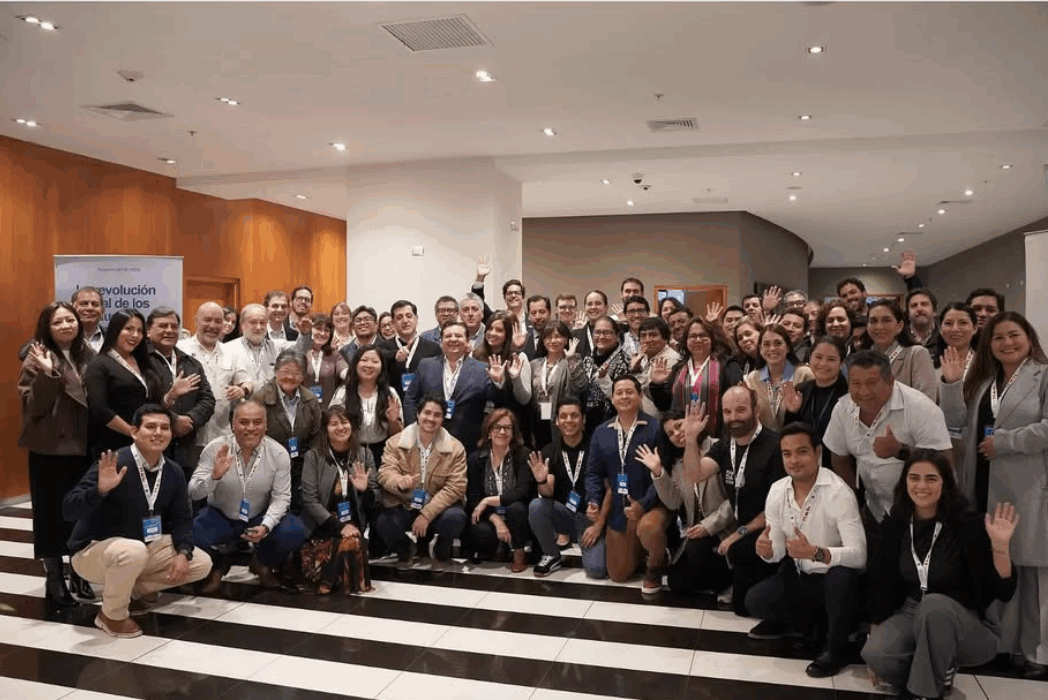
Nuestro director ejecutivo, Guillermo Morán, participó en el taller regional “La revolución digital de los productos del mar”, realizado en Perú del 15 al 17 de julio de 2025.

Este encuentro reunió a delegaciones de Ecuador, Perú y Chile, con el objetivo de seguir fortaleciendo el Proyecto GEF, que impulsa la pesca legal, trazable y sostenible mediante sistemas digitales de documentación y trazabilidad (eCDT).

La participación de TUNACONS reafirma nuestro compromiso de colaborar con aliados regionales, organizaciones y gobiernos en la protección de los océanos y en la construcción de un futuro próspero para la pesca responsable.

👉 Lee más detalles en WWF: Proyecto GEF – Perú, Chile y Ecuador avanzan hacia una pesca legal, trazable y sostenible

TUNACONS represents Ecuador in the South Pacific 🌊🇪🇨

Our Executive Director, Guillermo Morán, took part in the regional workshop “The Digital Revolution of Seafood Products”, held in Peru from July 15–17, 2025.

The event brought together representatives from Ecuador, Peru, and Chile to strengthen the GEF Project, which promotes legal, traceable, and sustainable fishing through digital catch documentation and traceability systems (eCDT).

TUNACONS’ participation highlights our commitment to working alongside regional partners, organizations, and governments to protect our oceans and ensure a prosperous future for responsible fishing.

👉 Read more at WWF: GEF Project – Peru, Chile, and Ecuador advance towards legal, traceable, and sustainable fisheries

TUNACONS vertritt Ecuador im Südpazifik 🌊🇪🇨

Unser Geschäftsführer, Guillermo Morán, nahm am regionalen Workshop „Die digitale Revolution der Meeresprodukte“ teil, der vom 15. bis 17. Juli 2025 in Peru stattfand.

Die Veranstaltung brachte Vertreter aus Ecuador, Peru und Chile zusammen, um das GEF-Projekt weiter zu stärken. Dieses Projekt fördert die legale, rückverfolgbare und nachhaltige Fischerei durch digitale Systeme zur Fangdokumentation und Rückverfolgbarkeit (eCDT).

Die Teilnahme von TUNACONS unterstreicht unser Engagement, gemeinsam mit regionalen Partnern, Organisationen und Regierungen die Ozeane zu schützen und eine verantwortungsvolle Fischerei für eine nachhaltige Zukunft zu sichern.

👉 Mehr Details bei WWF: GEF-Projekt – Peru, Chile und Ecuador schreiten voran zu einer legalen, rückverfolgbaren und nachhaltigen Fischerei

Tripulantes al Rescate: liberación responsable de una tortuga marina // Crew Members to the Rescue: Responsible Release of a Sea Turtle

En la pesca de atún con red de cerco, ocasionalmente se registran interacciones con especies acompañantes como las tortugas marinas. Gracias a la capacitación y compromiso de nuestros Tripulantes al Rescate, estas situaciones se convierten en oportunidades para aplicar buenas prácticas que marcan la diferencia.

Durante una faena a bordo del buque pesquero Roberto A., y bajo la observación de Diego Plaza, se llevó a cabo el rescate de una tortuga verde. El procedimiento incluyó un manejo rápido, cuidadoso y seguro, garantizando tanto el bienestar del animal como la seguridad de la tripulación.

La tortuga fue devuelta sana y salva al océano, demostrando el compromiso de TUNACONS con la conservación de la biodiversidad marina y la promoción de una pesca responsable. Con cada acción como esta, avanzamos hacia un ecosistema marino más sano y sostenible.

In tuna purse seine fishing, interactions with accompanying species such as sea turtles can sometimes occur. Thanks to the training and commitment of our Crew Members to the Rescue, these situations become opportunities to apply best practices that truly make a difference.

During a fishing operation aboard the vessel Roberto A., under the observation of Diego Plaza, a green turtle was rescued. The process involved quick, careful, and safe handling, ensuring both the animal’s welfare and the safety of the crew.

The turtle was successfully released back into the ocean, highlighting TUNACONS’ commitment to marine biodiversity conservation and the promotion of responsible fishing. With every action like this, we move forward towards a healthier and more sustainable marine ecosystem.

Besatzungsmitglieder als Retter: Verantwortungsvolle Freilassung einer Meeresschildkröte

Beim Thunfischfang mit Ringwaden kommt es gelegentlich zu Begegnungen mit Beifangarten wie Meeresschildkröten. Dank der Schulung und des Engagements unserer Besatzungsmitglieder als Retter werden diese Situationen zu Chancen, bewährte Praktiken anzuwenden, die den Unterschied machen.

Während eines Einsatzes an Bord des Fischereifahrzeugs Roberto A. und unter Beobachtung von Diego Plaza wurde eine Grüne Meeresschildkröte gerettet. Der Ablauf umfasste eine schnelle, sorgfältige und sichere Handhabung, die sowohl das Wohlergehen des Tieres als auch die Sicherheit der Besatzung gewährleistete.

Die Schildkröte konnte gesund und sicher ins Meer zurückkehren – ein klares Beispiel für das Engagement von TUNACONS für den Schutz der marinen Biodiversität und die Förderung einer verantwortungsvollen Fischerei. Mit jeder solchen Aktion nähern wir uns einem gesünderen und nachhaltigeren Meeresökosystem.

Servigrup – Redes que se transforman en soluciones sostenibles

Más de 10 toneladas de redes de pesca en desuso, donadas por nuestra empresa miembro Servigrup, se suman a la economía circular gracias a la colaboración con Bureo. Estas redes fueron recicladas y convertidas en artículos útiles como gafas de sol, chompas, gorras, tablas de surf y mucho más, utilizando el innovador material NetPlus.

Este esfuerzo no solo combate una de las formas más dañinas de contaminación plástica marina, sino que además evitó la emisión de 13.206 kg de CO₂, generando un impacto ambiental positivo y fomentando la economía circular en comunidades pesqueras.

Fishing nets transformed into sustainable solutions
More than 10 tons of discarded fishing nets, donated by our member company Servigrup, have been given a second life through our partnership with Bureo. These nets were recycled and turned into useful items such as sunglasses, jackets, caps, surfboards, and much more, using the innovative NetPlus material.

This initiative not only tackles one of the most harmful forms of marine plastic pollution but also helped prevent the emission of 13,206 kg of CO₂, creating a positive environmental impact and promoting circular economy practices in fishing communities.

Fischernetze werden zu nachhaltigen Lösungen
Mehr als 10 Tonnen ausrangierte Fischernetze, gespendet von unserem Mitgliedsunternehmen Servigrup, erhielten durch die Zusammenarbeit mit Bureo ein zweites Leben. Die Netze wurden recycelt und in nützliche Produkte wie Sonnenbrillen, Jacken, Mützen, Surfbretter und vieles mehr verwandelt – mit dem innovativen Material NetPlus.

Diese Initiative bekämpft nicht nur eine der schädlichsten Formen der Meeresplastikverschmutzung, sondern verhinderte auch den Ausstoß von 13.206 kg CO₂. Damit wird ein positiver Umwelteinfluss geschaffen und die Kreislaufwirtschaft in Fischereigemeinden gefördert.

Over 180 Tons of Disused Fishing Nets Given a Second Life Thanks to NIRSA and Bureo – Über 180 Tonnen ausgediente Fischernetze erhalten dank NIRSA und Bureo ein zweites Leben

As part of its commitment to sustainability and the circular economy, NIRSA, a member of TUNACONS, has donated more than 180 tons of disused fishing nets to be recycled and transformed into new everyday products in collaboration with Bureo.

Between April and June 2024 alone, a total of 187.56 tons were delivered — 50.34 t in April, 95.18 t in May, and 42.04 t in June. This initiative helped avoid the emission of 232,574.4 kg of CO₂, contributing directly to climate change mitigation.

Instead of becoming difficult-to-manage waste, these nets are now part of a specialized recycling process that turns them into sustainable accessories for daily use.

Through these efforts, NIRSA and TUNACONS reaffirm their commitment to marine conservation, recycling innovation, and reducing the environmental footprint of fishing activities.

This initiative stands as a concrete example of how responsible fishing and cross-sector collaboration can generate positive impacts for the ocean and the planet. 🌍💙♻️

Im Rahmen ihres Engagements für Nachhaltigkeit und Kreislaufwirtschaft hat NIRSA, Mitglied von TUNACONS, mehr als 180 Tonnen ausgedienter Fischernetze gespendet. Diese werden nun in Zusammenarbeit mit Bureo recycelt und in neue Alltagsprodukte verwandelt.

Allein zwischen April und Juni 2024 wurden insgesamt 187,56 Tonnen übergeben – 50,34 t im April, 95,18 t im Mai und 42,04 t im Juni. Durch diese Initiative konnten 232.574,4 kg CO₂-Emissionen vermieden und somit ein direkter Beitrag zum Klimaschutz geleistet werden.

Anstatt schwer zu entsorgender Abfälle zu werden, fließen die Netze nun in einen spezialisierten Recyclingprozess, der sie in nachhaltige Accessoires für den täglichen Gebrauch verwandelt.

Mit diesem Einsatz bekräftigen NIRSA und TUNACONS ihr Engagement für Meeresschutz, Recycling-Innovationen und die Verringerung des ökologischen Fußabdrucks der Fischerei.

Diese Initiative zeigt eindrucksvoll, wie verantwortungsvolle Fischerei und sektorübergreifende Zusammenarbeit positive Auswirkungen für die Ozeane und den Planeten schaffen können. 🌍💙♻️

Más de 180 toneladas de redes de pesca en desuso reciben una segunda vida gracias a NIRSA y Bureo

En el marco de su compromiso con la sostenibilidad y la economía circular, NIRSA, miembro de TUNACONS, ha donado más de 180 toneladas de redes de pesca en desuso que serán recicladas y transformadas en nuevos productos de uso diario, en colaboración con la organización Bureo.

Solo entre abril y junio de 2024 se entregaron 187,56 toneladas, distribuidas en 50,34 t en abril, 95,18 t en mayo y 42,04 t en junio. Este esfuerzo permitió evitar la emisión de 232.574,4 kg de CO₂, contribuyendo de manera directa a la mitigación del cambio climático.

Las redes, que en otro contexto podrían convertirse en residuos de difícil manejo, ahora se incorporan a un proceso de reciclaje especializado que da como resultado accesorios sostenibles y útiles para la vida cotidiana.

Con este tipo de acciones, NIRSA y TUNACONS reafirman su compromiso con la conservación marina, la innovación en reciclaje y la reducción de la huella ambiental de la actividad pesquera.

Este esfuerzo representa un ejemplo concreto de cómo la pesca responsable y la colaboración intersectorial pueden generar impactos positivos para el océano y para el planeta. 🌍💙♻️

fad fish aggregating device

🌊 Ecuador führt mit über 5.000 nachhaltigen Lockbojen im Pazifik

Tunacons setzt weltweit Maßstäbe für verantwortungsvolle Fischerei

Die ecuadorianische Initiative Tunacons hat ihre Führungsrolle in der nachhaltigen Fischerei gefestigt: In den letzten vier Jahren wurden mehr als 5.000 nachhaltige Lockbojen (ECOfads) im östlichen Pazifik ausgesetzt. Diese biologisch abbaubaren, nicht verschmutzenden und nicht-verfangenden Geräte stellen eine wahre Revolution im Thunfischfang dar – mit vollem Respekt gegenüber der marinen Artenvielfalt.

Direktor Guillermo Morán erklärte im Interview mit Radio WQ, dass dieser Wandel weder einfach noch spontan war: „Es waren Jahre der Forschung, über zwei Millionen Dollar an Investitionen, viele Tests auf See und eine enge Zusammenarbeit mit den Kapitänen nötig.“ Das Ergebnis war ein effizientes, umweltfreundliches und wirtschaftlich tragfähiges Prototyp, das inzwischen in Serie produziert wird.

Ab 2026 wird die Verwendung dieser Lockbojen für die gesamte Thunfischflotte im östlichen Pazifik verpflichtend – laut einer Resolution der Interamerikanischen Kommission für Tropischen Thunfisch (IATTC). „Wir sind nicht nur Vorreiter in Ecuador, sondern weltweit. Das wurde auch in internationalen Foren anerkannt, wo Kapitäne und Experten aus Asien, Europa und Nordamerika uns zustimmen“, betonte Morán.

Ein großer Erfolg war der Bewusstseinswandel bei den Kapitänen. Anfangs gab es Zweifel, ob die neuen Bojen die Produktivität verringern würden. Heute berichten viele von besseren Fangergebnissen mit den ECOfads. Durch den Einsatz natürlicher Materialien wie Abacá, Balsa und organischem Kautschuk aus Ecuador konnte die Lebensdauer der Bojen auf fast fünf Monate erhöht werden – ohne das Ökosystem zu belasten.

Diese Entwicklung hat auch neue internationale Märkte erschlossen, insbesondere in Europa. Länder wie Deutschland, Norwegen und die Niederlande legen großen Wert auf verantwortungsvolle Praktiken und Zertifizierungen wie das Marine Stewardship Council (MSC). Die Transformation nützt nicht nur den 58 industriellen Tunacons-Schiffen, sondern positioniert Ecuador als weltweites Vorbild in Sachen Nachhaltigkeit.

„Das ist kein bloßes Versprechen – es ist überprüfbare Realität. Wir wurden auf Messen, Foren und internationalen Veranstaltungen für unsere Arbeit gelobt. Unser Ziel ist es, noch mehr Partner zu gewinnen und diese guten Praktiken weltweit zu verbreiten“, schloss Morán.

fad fish aggregating device

Ecuador leads with over 5,000 sustainable FADs in the Pacific

Tunacons sets a global milestone in responsible fishing innovation

The Ecuadorian initiative Tunacons has solidified its leadership in sustainable fishing after deploying over 5,000 sustainable fish aggregating devices (ECOfads) in the eastern Pacific Ocean over the past four years. These FADs—biodegradable, non-polluting, and non-entangling—represent a revolution in tuna fishing, with full respect for marine biodiversity.

Tunacons director Guillermo Morán stated in an interview with Radio WQ that this transformation was neither simple nor improvised: “It took years of research, more than two million dollars in investment, numerous at-sea trials, and strong cooperation with fishing captains.” The process culminated in the development of an efficient, eco-friendly, and viable prototype that is now being produced at scale.

Starting in 2026, the use of these FADs will be mandatory for the entire tuna fleet operating in the eastern Pacific, thanks to a resolution by the Inter-American Tropical Tuna Commission (IATTC). “We’re not only pioneers in Ecuador; we are leading globally. This has been acknowledged in international forums, where captains and experts from Asia, Europe, and North America agree we’re on the right track,” said Morán.

One of the greatest achievements has been the shift in mindset among captains. Initially hesitant, fearing lower productivity, many now report better fishing results with ECOfads. Thanks to natural materials like abacá, balsa, and organic rubber—all sourced in Ecuador—the lifespan of these FADs has been extended to nearly five months without harming the marine environment.

Moreover, this innovation has opened new international markets, especially in Europe, where countries like Germany, Norway, and the Netherlands value responsible practices and certifications like the Marine Stewardship Council (MSC). The transformation benefits not only the 58 industrial vessels in the Tunacons fleet but also positions Ecuador as a global benchmark in sustainability.

“This is not just a speech—it’s a verifiable reality. We’ve presented at fairs, forums, and international events where Ecuador’s work has been recognized. Our goal is to keep growing partnerships and expand these best practices beyond our borders,” Morán concluded.

fad fish aggregating device

🌊 Ecuador lidera con más de 5.000 plantados sostenibles en el Pacífico

Tunacons marca un hito mundial en innovación pesquera responsable

La iniciativa ecuatoriana Tunacons ha consolidado su liderazgo en sostenibilidad pesquera tras desplegar más de 5.000 dispositivos de pesca sostenibles (ECOfads) en el océano Pacífico oriental durante los últimos cuatro años. Estos plantados —biodegradables, no contaminantes y no enmallantes— representan una revolución en la forma en que se captura el atún, respetando al máximo la biodiversidad marina.

El director de Tunacons, Guillermo Morán, destacó en entrevista con Radio WQ que esta transformación no ha sido sencilla ni improvisada: “Fueron años de investigación, más de dos millones de dólares en inversión, múltiples pruebas en el mar y una cooperación activa con los capitanes de pesca”. Este proceso culminó en el desarrollo de un prototipo eficiente, ecológico y viable, cuya producción en serie ya ha comenzado.

A partir de 2026, el uso de estos plantados será obligatorio para toda la flota atunera que opera en el Pacífico oriental, gracias a una resolución de la Comisión Interamericana del Atún Tropical (CIAT). “No solo somos pioneros en Ecuador, lo somos a nivel mundial. Y eso ha sido reconocido en foros internacionales donde capitanes y expertos de Asia, Europa y Norteamérica coinciden en que vamos por el camino correcto”, aseguró Morán.

Uno de los mayores logros de este proceso ha sido el cambio de mentalidad entre los propios capitanes. Inicialmente reticentes por temor a reducir su productividad, hoy muchos afirman estar obteniendo mejores resultados con los ECOfads. Gracias al uso de materiales naturales como abacá, balsa y caucho orgánico producidos en Ecuador, se ha logrado extender la vida útil de los plantados hasta cinco meses sin comprometer el entorno marino.

Además, este avance ha abierto nuevos mercados internacionales, especialmente en Europa, donde países como Alemania, Noruega y Holanda valoran altamente las prácticas responsables y certificaciones como la del Marine Stewardship Council (MSC). La transformación no solo beneficia a la flota de Tunacons —compuesta por 58 barcos industriales— sino que posiciona a Ecuador como un referente global en sostenibilidad.

“Esto no es un discurso, es una realidad comprobable. Hemos hecho presentaciones en ferias, foros y espacios internacionales donde el trabajo ecuatoriano ha sido reconocido. Nuestro objetivo es seguir sumando aliados y expandiendo estas buenas prácticas más allá de nuestras fronteras”, concluyó Morán.

Proudly powered by Wpopal.com