Five founding members of TUNACONS have achieved Marine Stewardship Council (MSC) certification for yellowfin tuna products caught in the Eastern Pacific Ocean.
The Ecuadorian companies involved in the initiative are Negocios Industriales Real NIRSA S.A., Servigrup, and Eurofish, along with Panamanian firm Pesquera Jadran and U.S.-based Tri Marine. The certification covers 47 vessels between the companies and is the first certification for yellowfin tunas school fish sets and fish-aggregating devices (FADs) in the Eastern Pacific.
“This milestone as achieved by the purse-seine tuna fleet is very important news for Ecuador and for the world because Ecuador is the second-largest producer in the world of tuna,” National Chamber of Fisheries (CNP) President Bruno Leone said. “If Ecuador has a large part of its fleet certified, other fleets can follow these good practices and regulations existing from the requirements of the MSC certification. Let’s hope all of Ecuador can come together so all can eventually be MSC-certified.”
Ecuadorian vessels catch approximately 300,000 metric tons of tuna annually in the Eastern Pacific, and 80 percent of its processed tuna products are exported to international markets, with its top market being the European Union.
The companies worked together for three years in a fishery improvement project (FIP) in order to meet these certification needs and standards. In order to achieve MSC certification, TUNACONS had to prove it was maintaining healthy tuna populations, minimizing impacts on the ecosystem, and promoting organized and responsible management of the fishery.
To do this, the participating companies committed to a series of activities including the research and testing of degradable materials for FADs; monitoring and collection of information on catches and bycatch through onboard observers; Implementation of a code of good practices to reduce bycatch, especially of vulnerable species such as sharks, manta rays, and sea turtles; and supporting scientific assessments of tropical tuna populations and promote adoption of conservation measures with the Inter-American Tropical Tuna Commission and governmental institutions. These measures were implemented with technical support from the World Wildlife Fund (WWF) and the Ecuadorian government, TUNACONS said.
El proyecto busca reducir la contaminación marina y generar ingresos temporales para pescadores artesanales durante la época de veda.
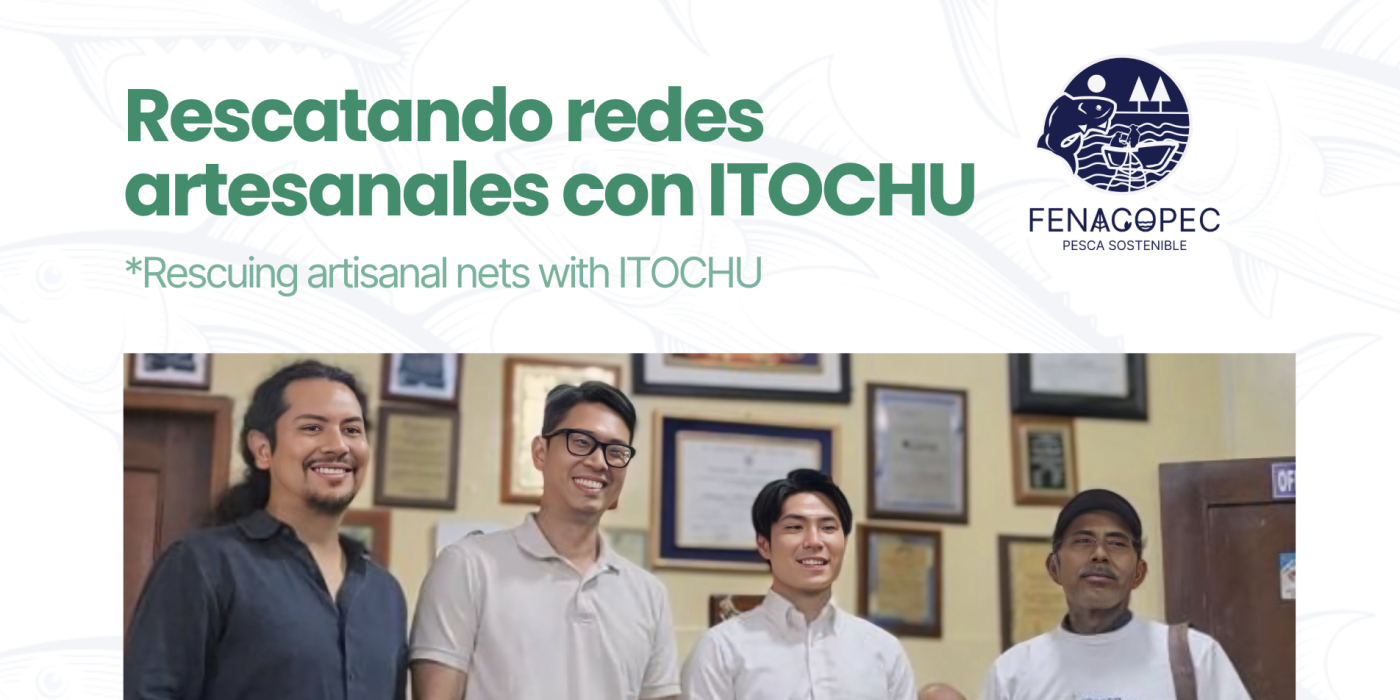
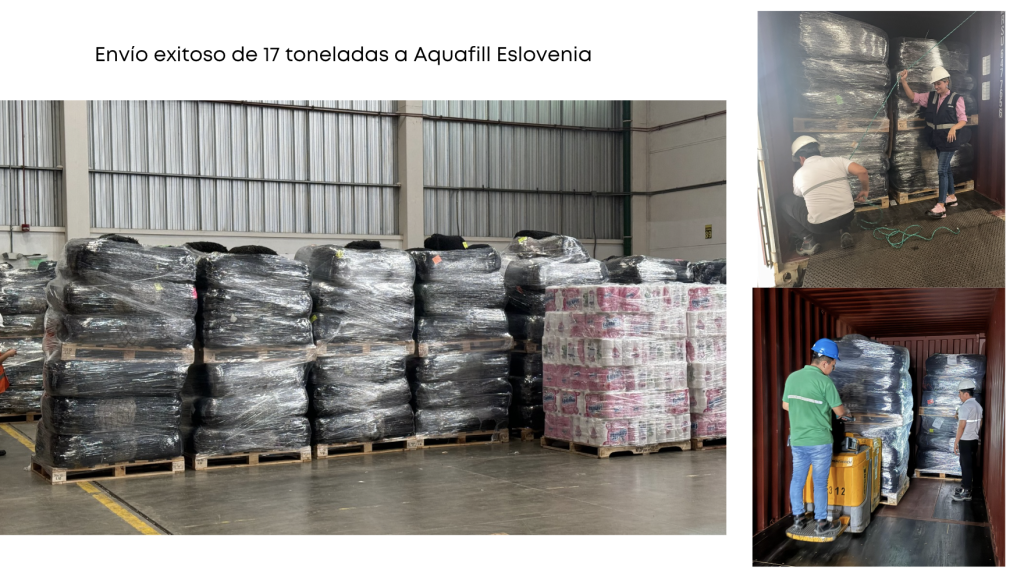
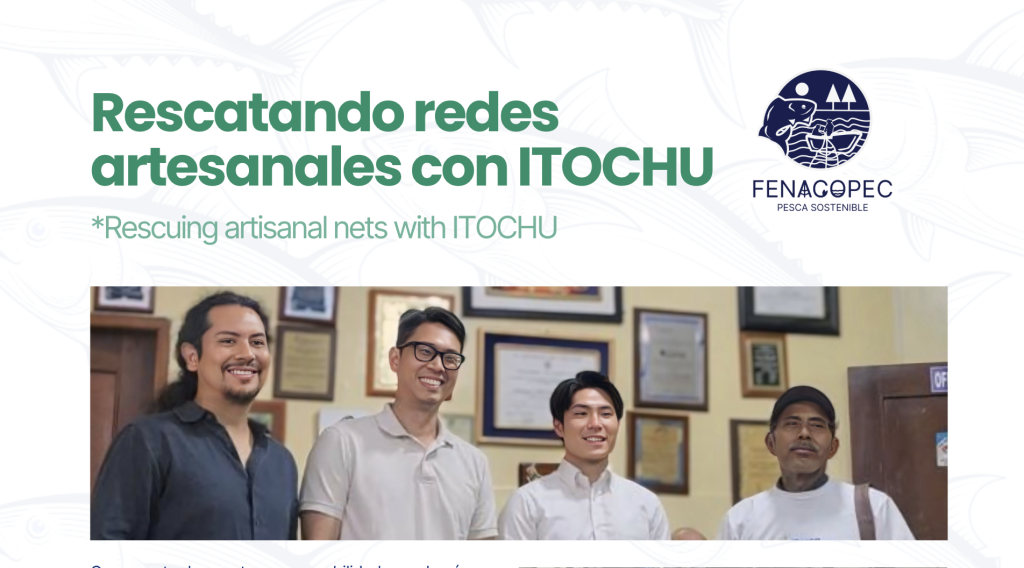
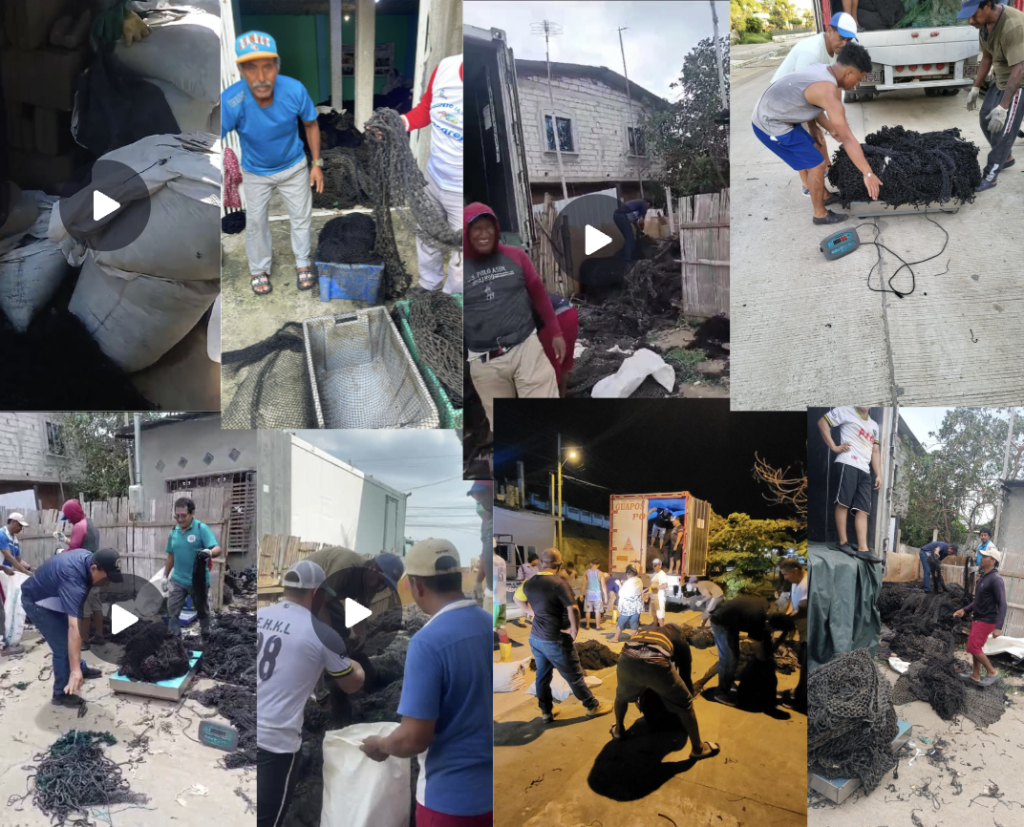
Guayaquil, Ecuador – Julio de 2022.- Lo que durante años fue considerado un residuo sin valor para cientos de pescadores artesanales de la costa ecuatoriana, hoy inicia un nuevo camino hacia la economía circular. Gracias al respaldo logístico y la inversión de la empresa japonesa ITOCHU Corporation, TUNACONS y la Federación Nacional de Cooperativas Pesqueras del Ecuador (FENACOPEC) concretaron el primer envío piloto de un contenedor lleno de redes de pesca artesanal descartadas con destino a procesos especializados de reciclaje internacional.
El proyecto representa un hito para el sector pesquero artesanal del Ecuador, al demostrar que es posible recuperar materiales que históricamente terminaban abandonados en playas, patios traseros, manglares o botaderos comunales, donde permanecían durante años generando contaminación y riesgos para la fauna marina.
La iniciativa nació como un plan piloto desarrollado junto a representantes de ITOCHU Japón en Ecuador, quienes brindaron acompañamiento técnico y seguimiento permanente para evaluar la viabilidad logística y ambiental del proyecto.
Más allá del componente ambiental, el programa incorpora un importante impacto social.
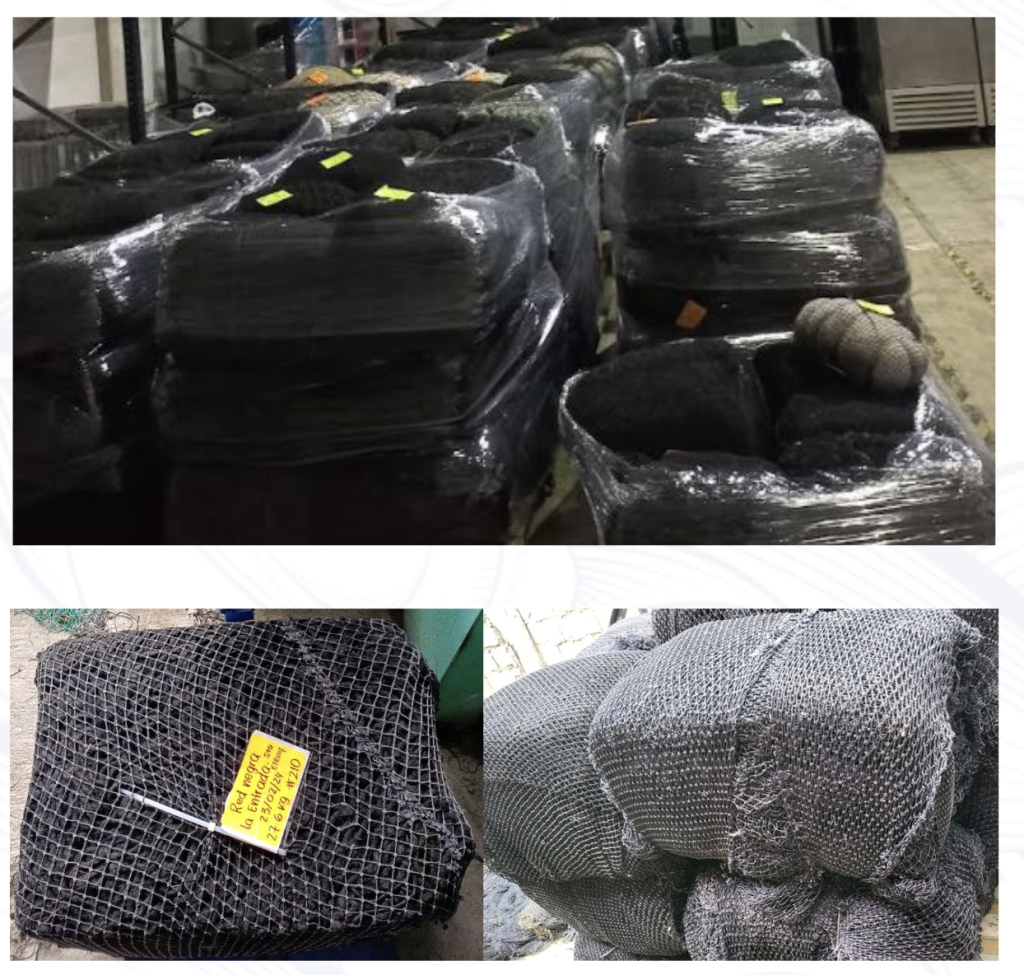
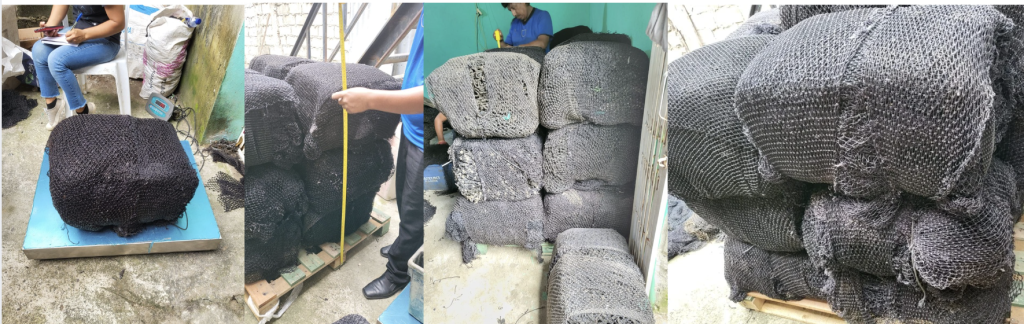
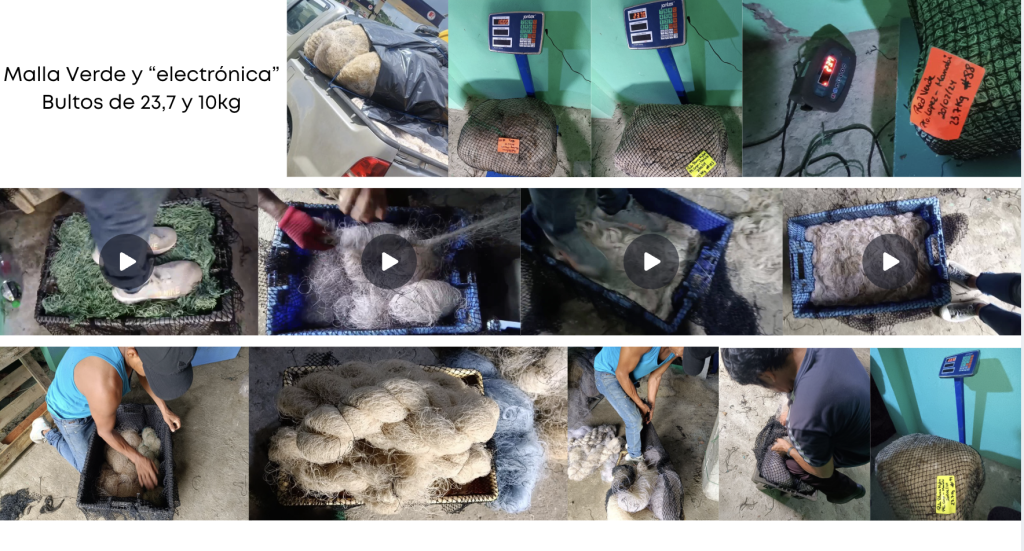
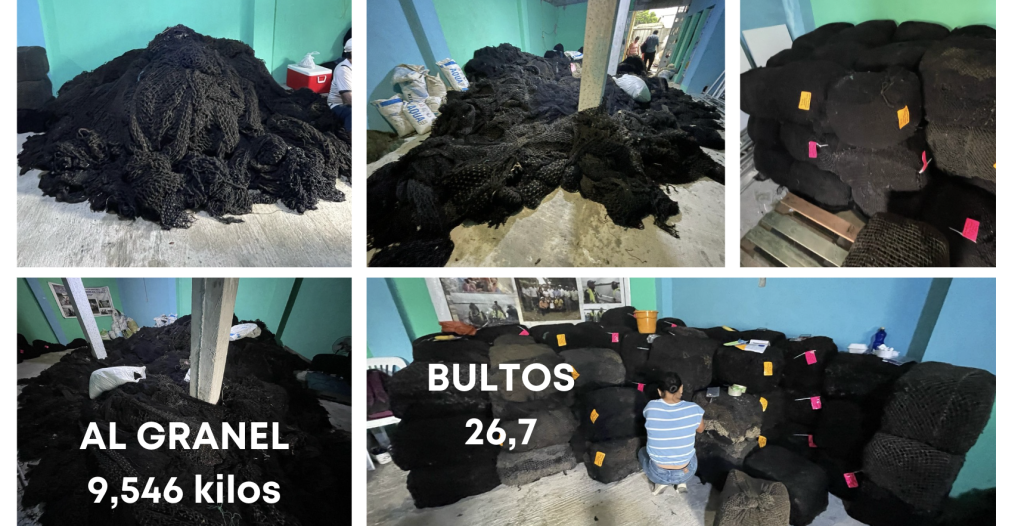
Las labores de recolección, clasificación, limpieza, secado, compactación y embalaje de las redes fueron realizadas íntegramente por pescadores artesanales de diferentes comunidades costeras durante la temporada de veda, periodo en el que su actividad pesquera disminuye considerablemente.
Este trabajo les permitió obtener un ingreso económico adicional mientras contribuían activamente a la protección del océano.
“No se trata de un proyecto comercial. Nuestro objetivo es ofrecer una solución ambiental para un residuo que durante décadas no tuvo destino, al tiempo que generamos oportunidades temporales de empleo para los pescadores y sus familias”, señaló TUNACONS.
Las redes recuperadas serán transformadas mediante procesos industriales especializados en nuevos productos de larga vida útil, como componentes para la industria textil, calzado, mobiliario y otros artículos elaborados con materiales reciclados.
Este primer envío permitirá evaluar la trazabilidad del material, los costos logísticos, la calidad de las redes recuperadas y el potencial de replicar el modelo en otras provincias pesqueras del país.
Para FENACOPEC, el proyecto representa además una nueva forma de involucrar a las organizaciones pesqueras en acciones concretas de conservación marina.
“Los pescadores conocen mejor que nadie el impacto que producen los residuos en el mar. Hoy ellos mismos están liderando parte de la solución”, destacó la organización.
TUNACONS agradeció especialmente el compromiso de ITOCHU Corporation por confiar en este proyecto piloto y asumir la inversión necesaria para hacer posible el primer envío, sentando las bases para futuras iniciativas que permitan fortalecer la economía circular en el sector pesquero ecuatoriano.
El proyecto continuará monitoreando los resultados obtenidos para desarrollar mecanismos que permitan ampliar la recuperación de redes de pesca artesanal en todo el litoral ecuatoriano y reducir la cantidad de residuos plásticos que llegan al océano.
TUNACONS, FENACOPEC and ITOCHU launch Ecuador’s first pilot shipment of discarded artisanal fishing nets for recycling
The initiative combines marine conservation with social support by creating temporary employment opportunities for artisanal fishers during the fishing closure season.
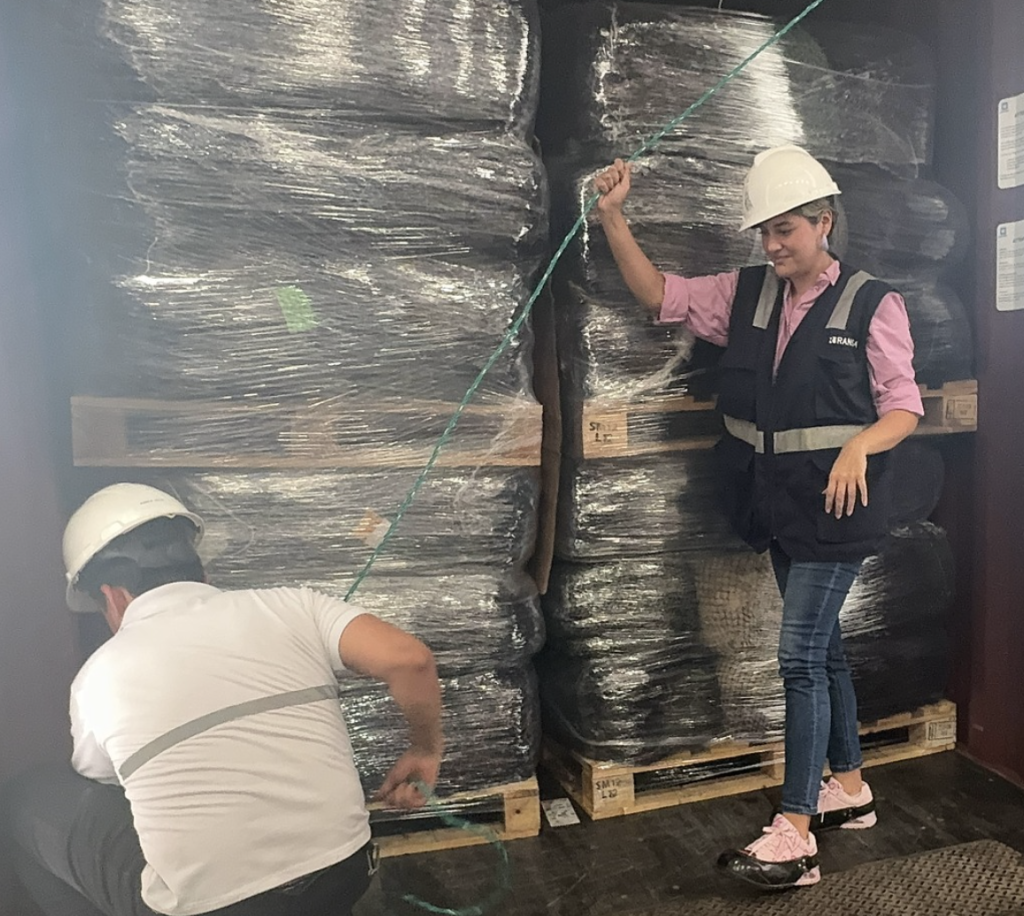
Guayaquil, Ecuador – July 2022. What was once considered waste by hundreds of artisanal fishers along Ecuador’s coastline is now beginning a second life through the circular economy. Thanks to the logistical support and financial investment of ITOCHU Corporation, TUNACONS and the National Federation of Fisheries Cooperatives of Ecuador (FENACOPEC) successfully completed the country’s first pilot shipment of a full shipping container of discarded artisanal fishing nets destined for specialized recycling facilities.
The project marks an important milestone for Ecuador’s artisanal fishing sector, demonstrating that end-of-life fishing gear can be recovered instead of being abandoned on beaches, mangroves, backyards or municipal dumping sites, where it often remains for years, contributing to marine pollution and posing risks to wildlife.
The pilot initiative was developed with the technical guidance and continuous support of ITOCHU Japan and its representatives in Ecuador, who worked closely with local partners to evaluate the environmental and logistical feasibility of establishing a recycling value chain for discarded fishing nets.
Beyond its environmental impact, the initiative was designed with a strong social focus.
All collection, sorting, cleaning, drying, packing and loading activities were carried out entirely by artisanal fishers from coastal communities during the seasonal fishing closure, when fishing activity is significantly reduced.
This provided participating fishers with an additional source of income while allowing them to actively contribute to protecting Ecuador’s marine ecosystems.
“This is not a commercial project. Our goal is to provide an environmentally responsible solution for fishing nets that previously had no sustainable end-of-life option, while creating temporary employment opportunities for artisanal fishing communities,” stated TUNACONS.
Once processed abroad, the recovered nylon will be transformed into new long-life products such as textiles, footwear, furniture components and other recycled consumer goods, extending the useful life of the material and reducing demand for virgin plastics.
The pilot shipment will also provide valuable information regarding material traceability, logistics, operational costs and the scalability of the model for future implementation across Ecuador’s coastline.
For FENACOPEC, the initiative demonstrates the important role that artisanal fishers can play in marine conservation.
“Fishers understand better than anyone the impacts that marine debris has on the ocean. Today, they are becoming part of the solution by helping recover materials that would otherwise pollute our coastal ecosystems,” the federation stated.
TUNACONS expressed its appreciation to ITOCHU Corporation for making this pilot project possible through its financial investment and logistical support, establishing the foundation for future collaborative initiatives focused on sustainable fisheries and circular economy solutions.
The organizations expect the project’s results to contribute to the development of a permanent recovery system for discarded fishing nets throughout Ecuador, reducing marine plastic pollution while supporting coastal communities.
TUNACONS, ALCANZA CERTIFICACIÓN SOSTENIBLE PARA SU FLOTA EN ECUADOR
Las 5 empresas atuneras que crearon la fundación reúnen a la flota atunera de cerco más numerosa que opera en el Océano Pacífico para obtener la certificación de sostenibilidad pesquera MSC
Guayaquil, 7 de julio de 2022.- TUNACONS, fundación con sede en Ecuador para la pesca responsable de atún a través de SCS Global Services recibe la certificación internacional de sostenibilidad pesquera más reconocida a nivel mundial. Esta fue otorgada por el Marine Stewardship Council (MSC), organización internacional sin fines de lucro que distingue el manejo responsable de la pesquería de cerco de atunes producidos, procesados y comercializados en varios países del mundo, principalmente en la Unión Europea.
Los 5 miembros fundadores de TUNACONS, que representan 47 barcos, y que hoy alcanzan la primera certificación para los productos de atún “aleta amarilla” son las empresas ecuatorianas: Negocios Industriales Real NIRSA S.A., Servigrup, Eurofish; la empresa panameña Pesquera Jadran y la estadounidense Tri Marine, con el respaldo técnico del Fondo Mundial para la Naturaleza (WWF) capítulo Ecuador.
“Estamos muy orgullosos por certificar atún aleta amarilla y nos motiva para lograr alcanzar la certificación con las otras dos especies de atunes. Esta celebración no es solo de TUNACONS, ni tan solo del Ecuador, sino de toda la región por ser la flota más numerosa en certificar MSC en este lado del Pacífico”, afirma Guillermo Morán Velásquez, Director General TUNACONS.
Desde el año 2017, las empresas iniciaron sus actividad bajo un proyecto de mejora pesquera y luego de 3 años logró entrar en la evaluación final para la certificación, para cumplir los estándares científicos y técnicos del MSC que mantiene bajo tres principios para lograr una pesca sostenible y responsable: mantener las poblaciones de atúnes saludables, minimizar los impactos en el ecosistema, promover un manejo ordenado y responsable de la pesquería.
Para lograr cumplir con los estándares que la certificación MSC evalúa, desarrollaron una serie de actividades como:
Investigación y Pruebas con materiales degradables para la elaboración de Dispositivos agregadores de peces (Plantados/FADs) que, con materiales ecológicos los denomina EcoFADs.
Monitoreo y Recogida de información de capturas y fauna acompañante, voluntaria, a través de observadores a bordo de los buques más pequeños en los que esto no es una exigencia aún, pero que TUNACONS promueve hacia toda la región.
Aplicar un código de buenas prácticas para la reducción de la captura incidental de especies vulnerables como tiburones, mantarrayas y tortugas marinas
Apoyar las evaluaciones científicas de las poblaciones de atunes tropicales, necesarias para sustento científico sus condiciones de salud.
Promover la adopción de medidas de conservación en cooperación con las instituciones gubernamentales y la Comisión Interamericana del Atún Tropical (CIAT) que rige en el Océano Pacífico Oriental.
Desarrollar la Iniciativa CUIDANDO GALAPAGOS, para ayudar a reducir la contaminación marina.
Apoyar la cooperación técnica regional para el reciclaje de redes de pesca sin uso.
El próximo desafío de TUNACONS y de la flota atunera ecuatoriana, es lograr la certificación en las especies de atunes Barrilete y Patudo, las otras dos especies de pesca de atún en el país.
Obtener esta certificación le permite al Ecuador ser más competitivo a nivel internacional, debido a que el 80% de los productos de atún procesados en el país se exportan a diversos mercados internacionales, siendo los países de la Unión Europea, los más importantes.
TUNACONS, atún sostenible y responsable
Acerca de TUNACONS
Tuna Conservation Group, fundación ecuatoriana que agrupa a las empresas pesqueras que están en busca de alcanzar la certificación ecológica en pesca de atún. Su misión es promover un Proyecto de Mejoramiento Pesquero (FIP) para las pesquerías que atún con red de cerco que se realizan a través de sus embarcaciones, que ayude adecuadamente a construir un Proceso de certificación bajo el Estándar del Marine Stewardship Council MSC. Las empresas miembros de TUNACONS son: Negocios Industriales Real NIRSA S.A., Servigrup, Eurofish,; la empresa panameña Pesquera Jadran y la estadounidense Tri Marine, con el respaldo técnico del Fondo Mundial para la Naturaleza (WWF).
Acerca de MSC
El Marine Stewardship Council es una organización internacional sin fines de lucro. Reconoce y recompensa los esfuerzos para proteger los océanos y salvaguardar los suministros de productos del mar para el futuro.
Desde 1984, SCS ha sido pionera y líder en el campo de los estándares de sostenibilidad y de certificación a terceros, trabajando en la economía de los sectores de recursos naturales, entorno construido, alimentos y agricultura, productos de consumo y clima. Al asociarse con empresas, agencias gubernamentales, ONG y partes interesadas, nos esforzamos por avanzar en los objetivos de desarrollo sostenible a través de una evaluación independiente, la aplicación de ciencia sólida y soluciones innovadoras. A través de estos servicios, permitimos que los responsables de la toma de decisiones y los compradores tomen decisiones informadas, brindando a los innovadores una ventaja competitiva y ayudando a impulsar el desarrollo de estándares de liderazgo para crear un marco para la mejora continua. Con sede en Emeryville, California, SCS Global Services tiene representantes y oficinas afiliadas en toda América, Asia/Pacífico, Europa y África. Su amplia red de auditores es experta en sus campos, y la empresa es un socio de confianza para empresas, organismos y organizaciones de defensa de los derechos humanos gracias a su dedicación a la calidad y la profesionalidad. Para más información, visite www.scsglobalservices.com.
TUNACONS, Foundation for responsible tuna fishing,
achieves sustainable certification for its fleet in the Pacific Ocean Region.
Despite the economic crisis still being experienced worldwide due to the effects of the pandemic caused by COVID 19, the tuna companies involved in the TUNACONS Foundation have worked against all odds to achieve the most recognized international certification of sustainable fishing worldwide given by the Marine Stewardship Council MSC, which now distinguishes the responsible management of the tuna purse seine fishery produced, processed and marketed from Ecuador to the world.
The 5 founding members of TUNACONS, representing 47 vessels, which today achieve the first certification for “yellowfin” tuna products are the Ecuadorian companies: Negocios Industriales Real NIRSA S.A., Servigrup, Eurofish, the Panamanian company Pesquera Jadran and the American company Tri Marine with the technical support of the World Wildlife Fund (WWF).
From the beginning, in 2017 it was an ambitious project, so it was able to go into the final evaluation finishing its third year of the work plan, under a strategy and permanent commitment of companies to cooperate with several public and private organizations at national and international level to develop effective actions to help reduce the different impacts on marine environments.
Tunacons worked on three principles towards sustainable fishing: maintaining healthy tuna populations, minimizing impacts on the ecosystem, and promoting organized and responsible management of the fishery.
In order to achieve these standards that MSC certification evaluates, a series of activities must be developed, such as:
Research and Testing with degradable materials for the elaboration of Fish Aggregating Devices (FADs/FADs) which, with ecological materials denominated EcoFADs.
Monitoring and Collection of information on catches and by-catch, on a voluntary way, through observers on board the smaller vessels in which this is not a requirement yet, but which TUNACONS promotes towards the whole region.
Implement a code of good practices for the reduction of bycatch of vulnerable species such as sharks, manta rays and sea turtles.
Support scientific assessments of tropical tuna populations, necessary for scientific support of their health conditions.
Promote the adoption of conservation measures in cooperation with governmental institutions and the Inter-American Tropical Tuna Commission (IATTC) that governs the Eastern Pacific Ocean.
The tuna industry is the main activity of the country’s industrial fishing sector. In its 3 phases: catching, processing and commercialization.
The tuna industry is the most regulated by governmental entities and world organizations.
It is the 3rd most important non-oil export, and the first in industrialized products of our country.
Worldwide Ecuador is the 2nd largest exporter of tuna only after the giant Thailand. 80% of processed products are exported to various international markets, the most important being the countries of the European Union.
The fishing vessels that catch the most tuna in the Eastern Pacific are those of Ecuadorian flag with approximately 300 thousand tons, making us the first tuna producing country in the Eastern Pacific.
Ecuador has more than 20 Tuna Processing Plants with a processing level between 550 and 600 thousand tons per year.
The Ecuadorian tuna fishing fleet is one of the most important in the Eastern Pacific Ocean (EPO). There are 115 Ecuadorian-flagged fishing vessels, the largest fleet in the region, of which 60 are part of TUNACONS.
It is estimated that, between catching and processing, the industry generates more than 50,000 direct jobs, leading to a total of 120,000 indirect jobs throughout the tuna value chain, and at least 53% of the people employed in tuna processing plants are women.
Did you know that there are several types of tuna? The Ecuadorian tuna industry is particularly focused on catching the following species: yellowfin tuna, big eye tuna and skipjack.
We are the largest (tuna purse seine) fleet in the region to be MSC certified.