Galápagos, Ecuador — February 11, 2026
The TUNACONS Foundation continues to implement the “Cuidando Galápagos” initiative, which includes a prevention and early-response framework aimed at reducing environmental risks associated with drifting fish aggregating devices (FADs) and strengthening the protection of sensitive ecosystems in the Archipelago.
An operational protocol based on monitoring and local action
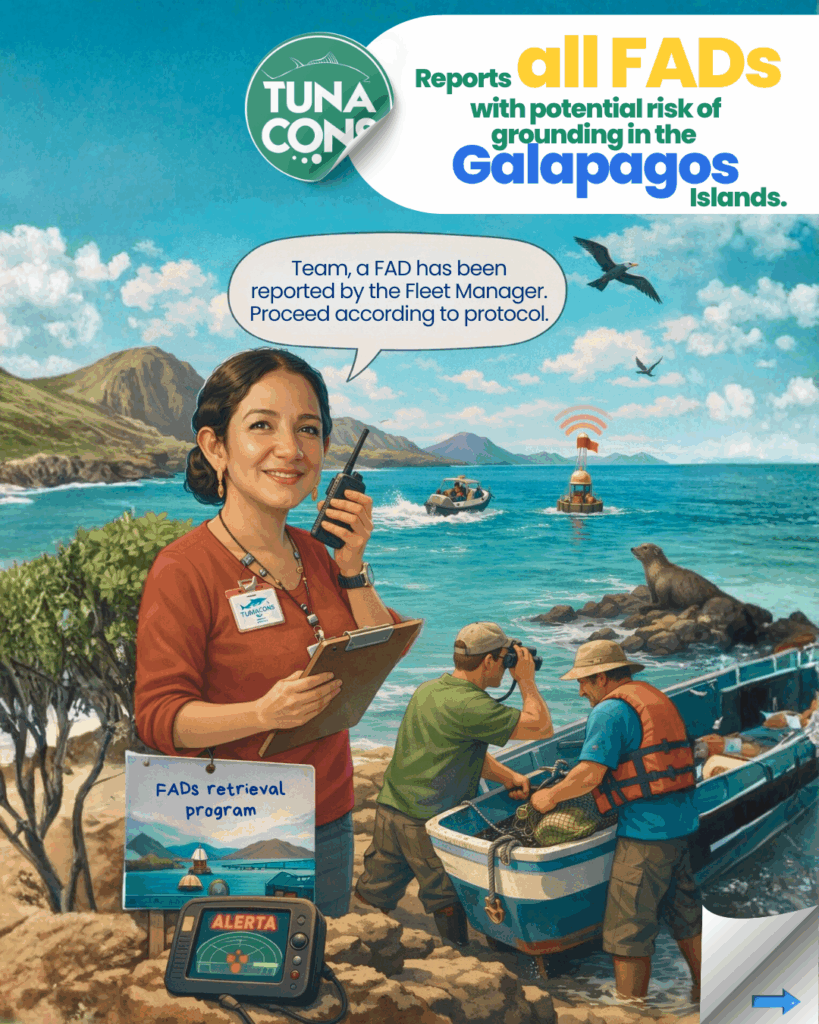
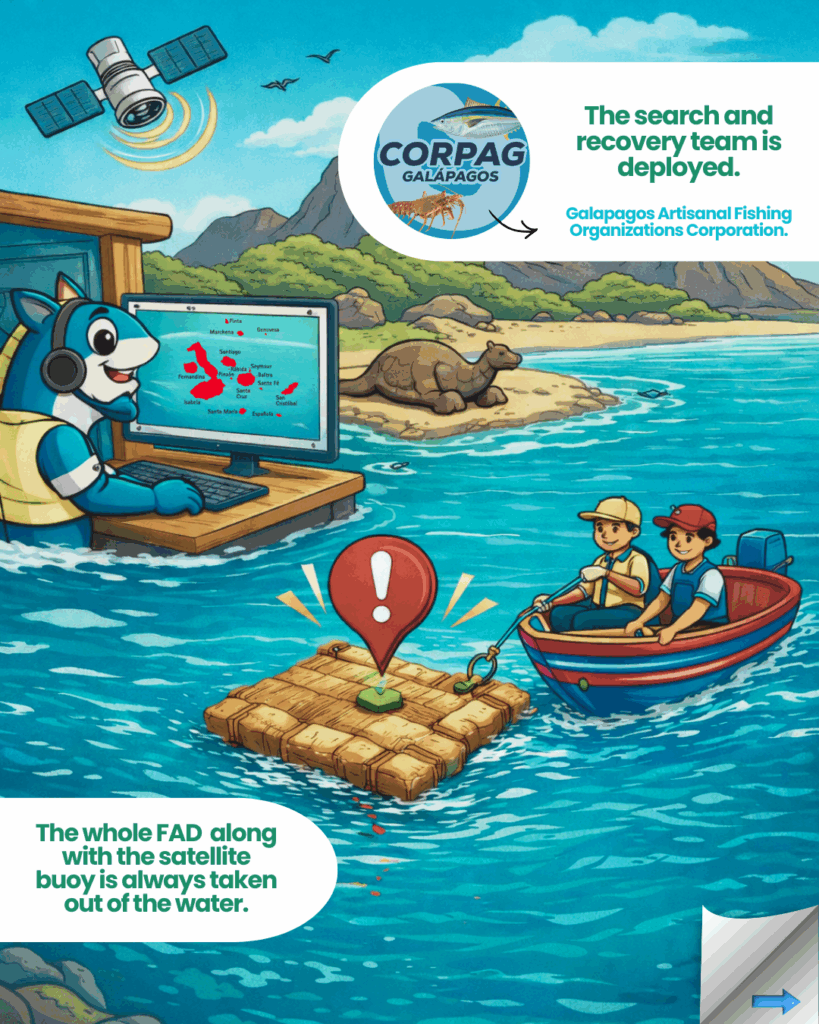
“Cuidando Galápagos” is activated through an alert protocol supported by satellite monitoring, trajectory analysis, and direct coordination with the associated fleet. When a potential drift or grounding risk is detected, coordination is triggered with a local recovery team in the islands—made up of artisanal fishing organizations linked to CORPAG—which carries out search and retrieval operations at sea.
Limited incidence and verifiable traceability
Depending on the time of year, the fleet associated with TUNACONS operates in areas close to the Galápagos Marine Reserve; however, project data show that the incidence of FADs within the Reserve is very low. On average, between 12 and 15 reports per year involve FADs with a potential risk of grounding.
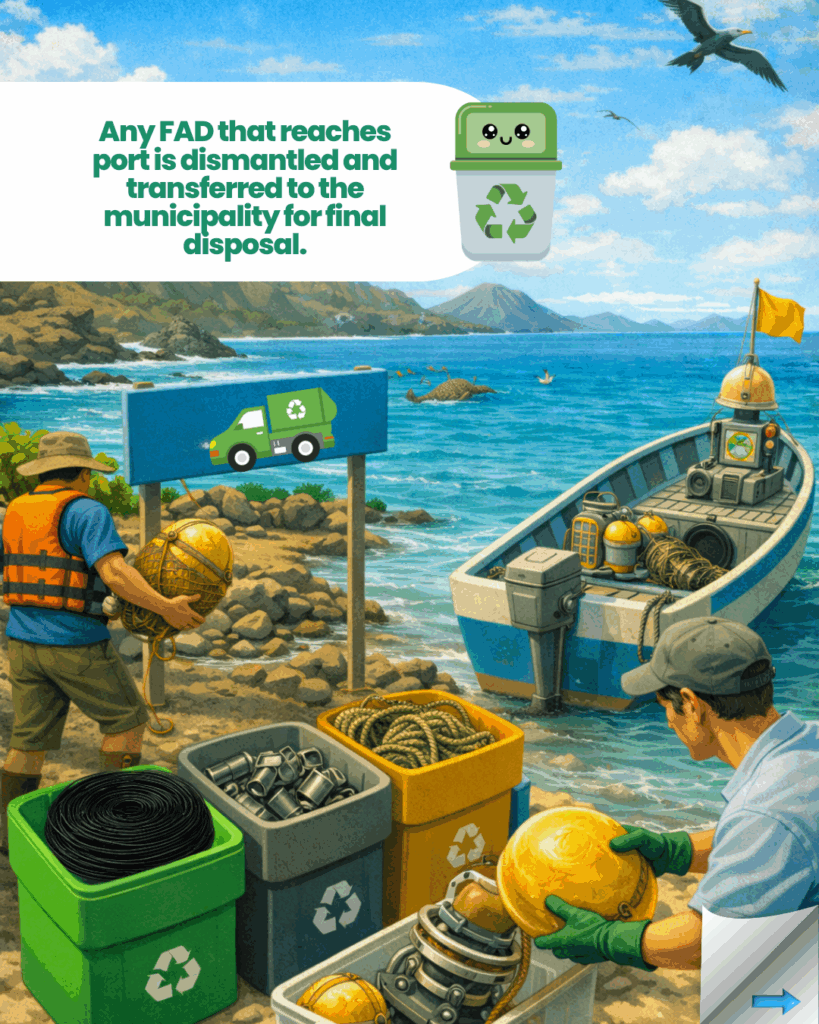
Recovery efforts include the entire FAD structure and its associated satellite buoy, ensuring complete removal of the device from the marine environment, maintaining traceability, and preventing residual impacts.
An operational challenge affecting tracking
As part of its technical assessment, TUNACONS has identified practices that hinder preventive recovery: along certain navigation routes, some vessels—whether engaged in tourism or other activities—remove or cut the satellite buoys from FADs found in other areas of the Reserve. Once the buoy is removed, the FAD can no longer be tracked, reducing localization capacity and increasing the risk of drift.
TUNACONS emphasizes that traceability is an essential component of environmental management, and any intervention that eliminates satellite tracking weakens preventive efforts.
Innovation to reduce impacts: biodegradable, non-entangling EcoFAD
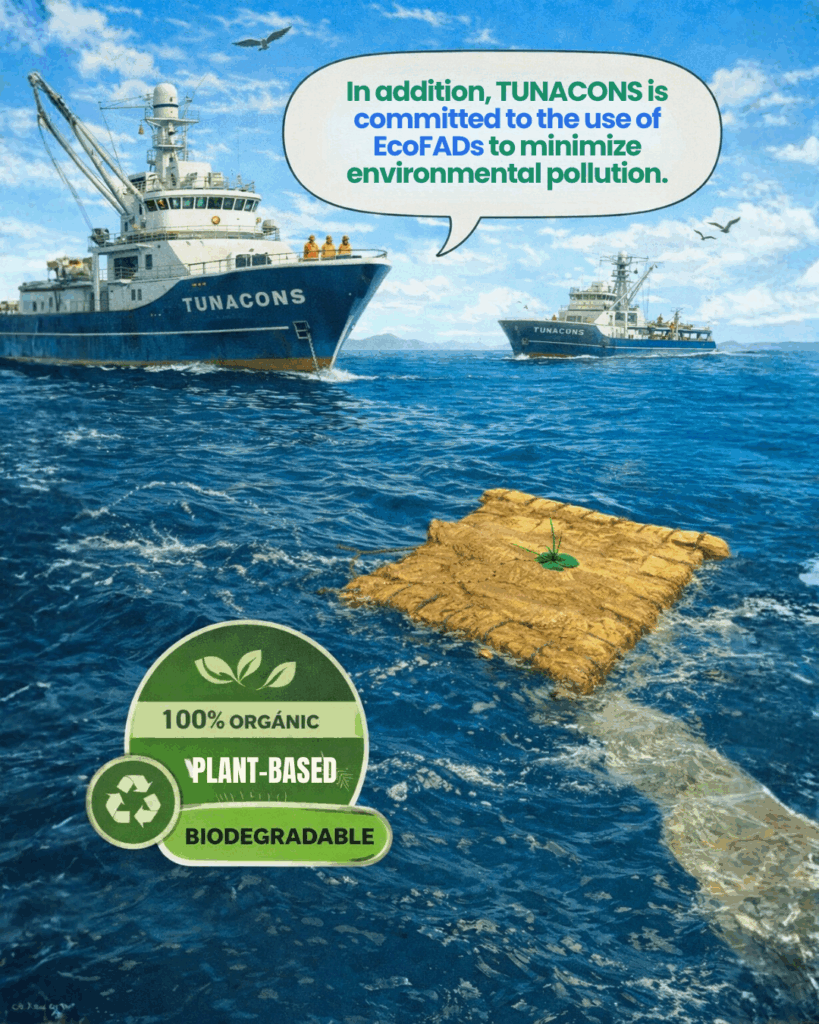
In parallel with preventive recovery, TUNACONS is advancing structural solutions to reduce impacts associated with FADs. The Foundation has developed an EcoFAD prototype made from plant-based materials that is 100% biodegradable and non-entangling, with no plastic components. This innovation supports the gradual elimination of synthetic materials in fishing and reinforces the initiative’s preventive approach.
Institutional statement
Guillermo Morán Velásquez, representative of TUNACONS, stated that the work in Galápagos is grounded in evidence, clear protocols, and on-the-ground action, with local participation and verifiable preventive measures. He added that the program’s operational experience has enabled expanded cooperation and the promotion of similar actions in other areas of the Pacific.
Morán Velásquez also noted that some publications continue to use headlines and content describing alleged severe damage in the Reserve without adequately reflecting the available evidence or the preventive and remedial efforts implemented by the associated fleet. In this context, he underscored that Ecuador’s tuna industry within TUNACONS maintains the Marine Stewardship Council (MSC) sustainability certification, one of the most widely recognized worldwide.
TUNACONS fortalece la protección de Galápagos con recuperación preventiva de plantados y soluciones biodegradables
Galápagos, Ecuador — 11 de febrero de 2026.
La Fundación TUNACONS mantiene en operación la iniciativa “Cuidando Galápagos”, que incluye un esquema de prevención y respuesta temprana orientado a reducir riesgos ambientales asociados a la deriva de plantados (FADs) y a reforzar la protección de ecosistemas sensibles del Archipiélago.
Un protocolo operativo basado en monitoreo y acción local
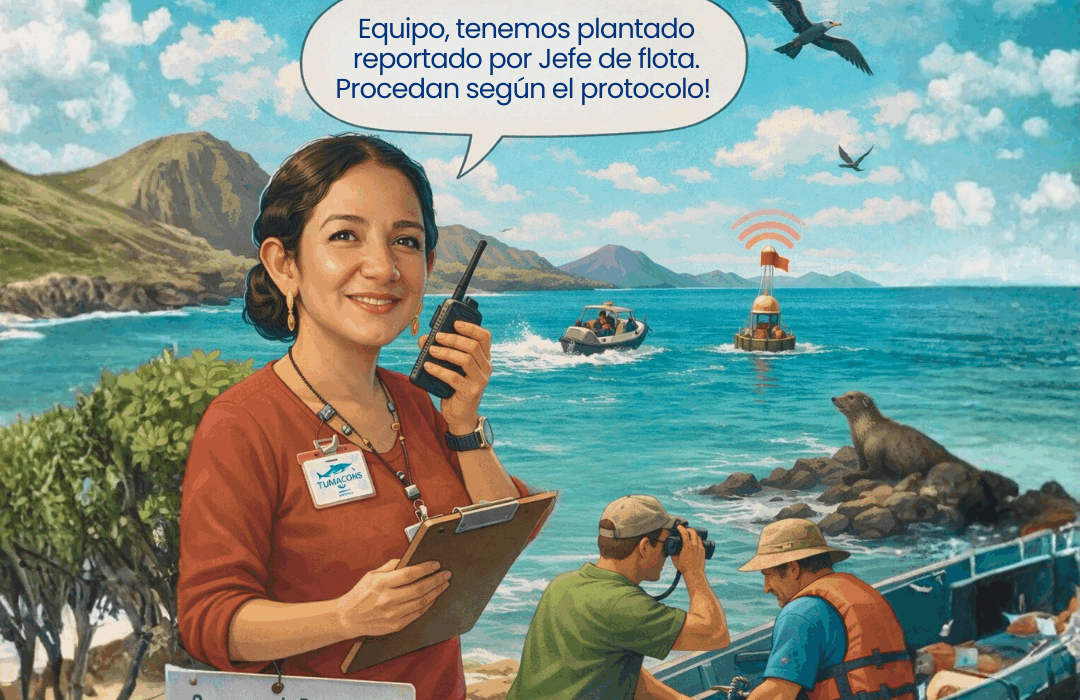
“Cuidando Galápagos” se activa mediante un protocolo de alertas sustentado en monitoreo satelital, análisis de trayectorias y coordinación directa con la flota asociada. Cuando se detecta un posible riesgo de deriva o varamiento, se activa la coordinación con un equipo local de recuperación en las islas, integrado por organizaciones pesqueras artesanales vinculadas a CORPAG, que ejecuta labores de búsqueda y retiro en el mar.
Incidencia acotada y trazabilidad verificable
La flota vinculada a TUNACONS opera, según la época del año, en áreas cercanas a la Reserva Marina de Galápagos; sin embargo, con base en los datos del proyecto, la incidencia de plantados dentro de la Reserva es muy baja. En promedio, se registran entre 12 y 15 reportes anuales de plantados con potencial riesgo de varamiento.
La recuperación incluye TODA la estructura del plantado y su boya satelital asociada, con el objetivo de asegurar el retiro completo del artefacto del entorno marino, mantener la trazabilidad y evitar impactos residuales.
Un desafío operativo que afecta el rastreo
Como parte de su evaluación técnica, TUNACONS ha identificado prácticas que dificultan la recuperación preventiva: en determinadas rutas de navegación, algunas embarcaciones —ya sea de turismo u otras actividades— retiran o cortan boyas satelitales de plantados encontrados en otras zonas de la reserva. Cuando se remueve la boya, el plantado queda sin rastreo, lo que reduce la capacidad de localización y aumenta el riesgo de deriva.
TUNACONS señala que la trazabilidad es un componente esencial de la gestión ambiental y que cualquier intervención que elimine el rastreo satelital debilita los esfuerzos preventivos.
Innovación para reducir impactos: EcoFAD biodegradable y no enmallante
De manera complementaria a la recuperación preventiva, TUNACONS impulsa soluciones estructurales para reducir impactos asociados a los plantados. La Fundación cuenta con un prototipo de EcoFAD elaborado con materiales de origen vegetal, 100% biodegradable y no enmallante, sin plástico en sus componentes. Esta innovación apunta a la eliminación progresiva de materiales sintéticos en la pesca y refuerza el enfoque preventivo de la iniciativa.
Declaración institucional
Guillermo Morán Velásquez, representante de TUNACONS, indicó que el trabajo en Galápagos se sostiene en evidencia, protocolos claros y acción en territorio, con participación local y medidas preventivas verificables. Añadió que la experiencia operativa del programa ha permitido ampliar la cooperación y promover acciones similares en otras zonas del Pacífico.
Morán Velásquez señaló además que persisten publicaciones con títulos y contenidos que describen supuestos daños graves en la zona de la Reserva, sin reflejar adecuadamente la evidencia disponible ni los esfuerzos preventivos y de remediación impulsados por la flota asociada. En ese contexto, destacó que la industria atunera ecuatoriana que integra TUNACONS mantiene la certificación de sostenibilidad pesquera del Marine Stewardship Council (MSC), considerada una de las más reconocidas a nivel mundial.
Para más información no dude en contactarnos:
gmoran@tunacons.org, mzambrano@tunacons.org, http://wa.me/593984814782
TUNACONS stärkt den Schutz der Galápagos-Inseln durch präventive Bergung von FADs und biologisch abbaubare Lösungen
Galápagos, Ecuador — 11. Februar 2026.
Die Stiftung TUNACONS setzt die Initiative „Cuidando Galápagos“ fort, die ein System zur Prävention und frühzeitigen Reaktion umfasst. Ziel ist es, Umweltrisiken im Zusammenhang mit der Drift von Fischsammlergeräten (FADs) zu reduzieren und den Schutz sensibler Ökosysteme des Archipels zu stärken.
Operatives Protokoll auf Basis von Monitoring und lokalem Handeln
„Cuidando Galápagos“ wird durch ein Alarmprotokoll aktiviert, das auf satellitengestütztem Monitoring, der Analyse von Driftverläufen und einer direkten Koordination mit der angeschlossenen Flotte basiert. Wird ein potenzielles Risiko von Drift oder Strandung erkannt, erfolgt die Abstimmung mit einem lokalen Bergungsteam auf den Inseln. Dieses Team setzt sich aus handwerklichen Fischereiorganisationen zusammen, die mit CORPAG verbunden sind, und führt Such- und Bergungsmaßnahmen auf See durch.
Begrenzte Vorkommnisse und überprüfbare Rückverfolgbarkeit
Die mit TUNACONS verbundene Flotte operiert je nach Jahreszeit in Gebieten nahe dem Galápagos-Meeresreservat. Auf Grundlage der Projektdaten ist das Auftreten von FADs innerhalb des Reservats jedoch sehr gering. Im Durchschnitt werden jährlich zwischen 12 und 15 Meldungen von FADs mit potenziellem Strandungsrisiko registriert.
Die Bergung umfasst stets die vollständige Struktur des FADs sowie die zugehörige Satellitenboje, um eine vollständige Entfernung des Geräts aus der Meeresumwelt sicherzustellen, die Rückverfolgbarkeit zu gewährleisten und verbleibende Auswirkungen zu vermeiden.
Operative Herausforderungen beim Tracking
Im Rahmen der technischen Evaluierung hat TUNACONS Praktiken identifiziert, die eine präventive Bergung erschweren: Auf bestimmten Schifffahrtsrouten entfernen oder durchtrennen einige Schiffe — sei es aus dem Tourismussektor oder aus anderen Aktivitäten — die Satellitenbojen von FADs, die in anderen Bereichen des Reservats gefunden werden. Wird die Boje entfernt, ist das FAD nicht mehr nachverfolgbar, was die Lokalisierungskapazität verringert und das Risiko unkontrollierter Drift erhöht.
TUNACONS weist darauf hin, dass Rückverfolgbarkeit ein wesentlicher Bestandteil des Umweltmanagements ist und dass jede Maßnahme, die das satellitengestützte Tracking eliminiert, präventive Bemühungen erheblich schwächt.
Innovation zur Reduzierung von Umweltauswirkungen: biologisch abbaubares, nicht verfangendes EcoFAD
Ergänzend zur präventiven Bergung fördert TUNACONS strukturelle Lösungen zur Reduzierung der mit FADs verbundenen Umweltauswirkungen. Die Stiftung verfügt über einen EcoFAD-Prototyp aus pflanzlichen Materialien, der zu 100 % biologisch abbaubar und nicht verfangend ist und keinerlei Kunststoffkomponenten enthält. Diese Innovation zielt auf die schrittweise Eliminierung synthetischer Materialien in der Fischerei ab und stärkt den präventiven Ansatz der Initiative.
Institutionelle Erklärung
Guillermo Morán Velásquez, Vertreter von TUNACONS, erklärte, dass die Arbeit auf den Galápagos-Inseln auf belastbaren Daten, klaren Protokollen und konkreten Maßnahmen vor Ort beruht, mit lokaler Beteiligung und überprüfbaren Präventionsmaßnahmen. Er ergänzte, dass die operative Erfahrung des Programms es ermöglicht habe, die Zusammenarbeit auszuweiten und ähnliche Initiativen in anderen Regionen des Pazifiks zu fördern.
Morán Velásquez wies zudem darauf hin, dass weiterhin Veröffentlichungen mit Überschriften und Inhalten kursieren, die angebliche schwerwiegende Schäden im Gebiet des Reservats beschreiben, ohne die verfügbare Evidenz sowie die präventiven und sanierenden Maßnahmen der angeschlossenen Flotte angemessen widerzuspiegeln. In diesem Zusammenhang betonte er, dass die ecuadorianische Thunfischindustrie, die in TUNACONS organisiert ist, die Nachhaltigkeitszertifizierung des Marine Stewardship Council (MSC) aufrechterhält, eine der weltweit anerkanntesten Zertifizierungen für nachhaltige Fischerei.
Für weitere Informationen kontaktieren Sie bitte:
gmoran@tunacons.org, mzambrano@tunacons.org, http://wa.me/593984814782