FADS RETRIEVAL GALAPAGOS

TUNACONS strengthens the protection of Galápagos through preventive FAD recovery and biodegradable solutions

Galápagos, Ecuador — February 11, 2026

The TUNACONS Foundation continues to implement the “Cuidando Galápagos” initiative, which includes a prevention and early-response framework aimed at reducing environmental risks associated with drifting fish aggregating devices (FADs) and strengthening the protection of sensitive ecosystems in the Archipelago.

An operational protocol based on monitoring and local action
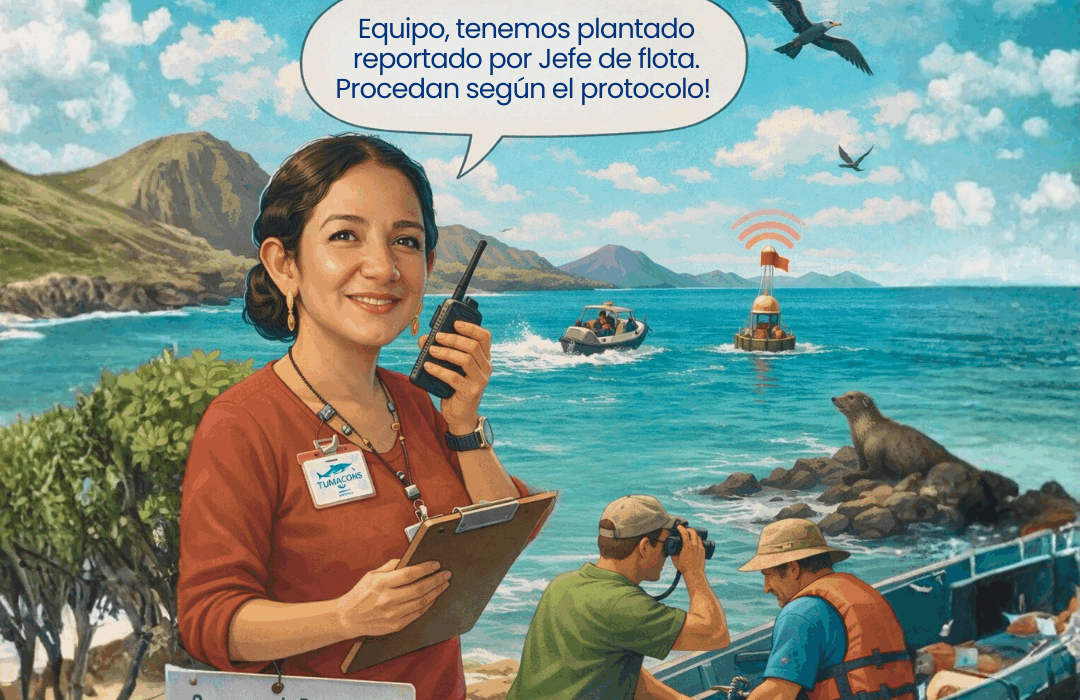
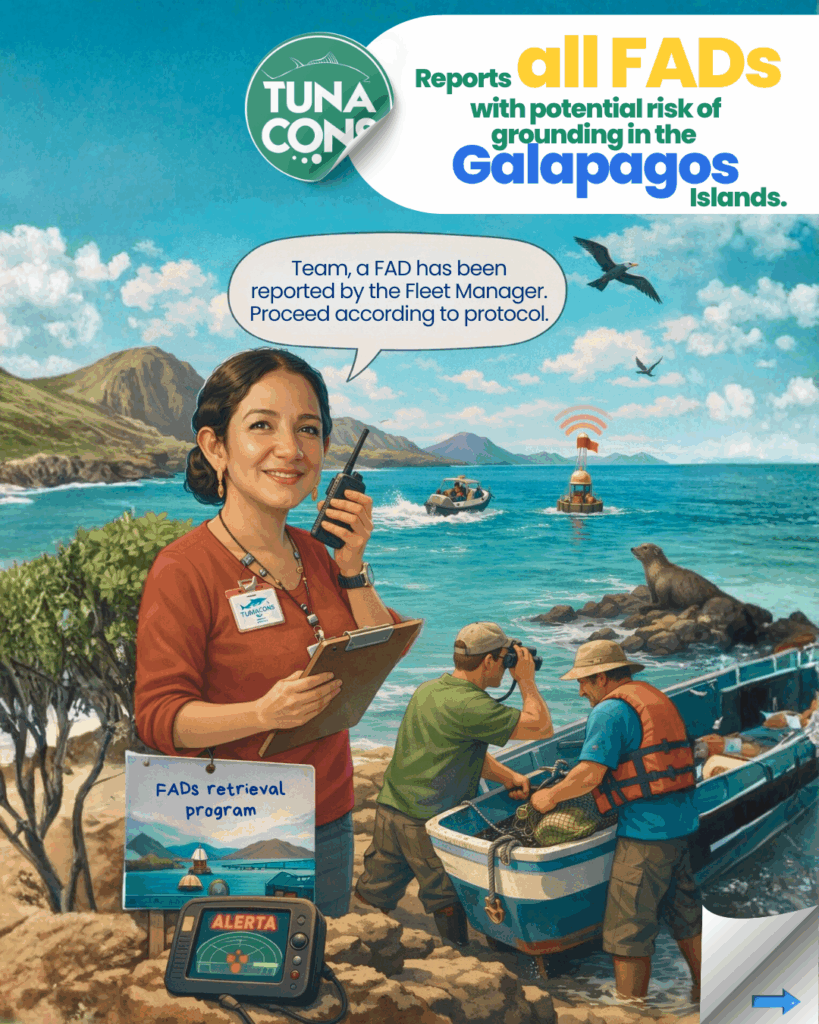
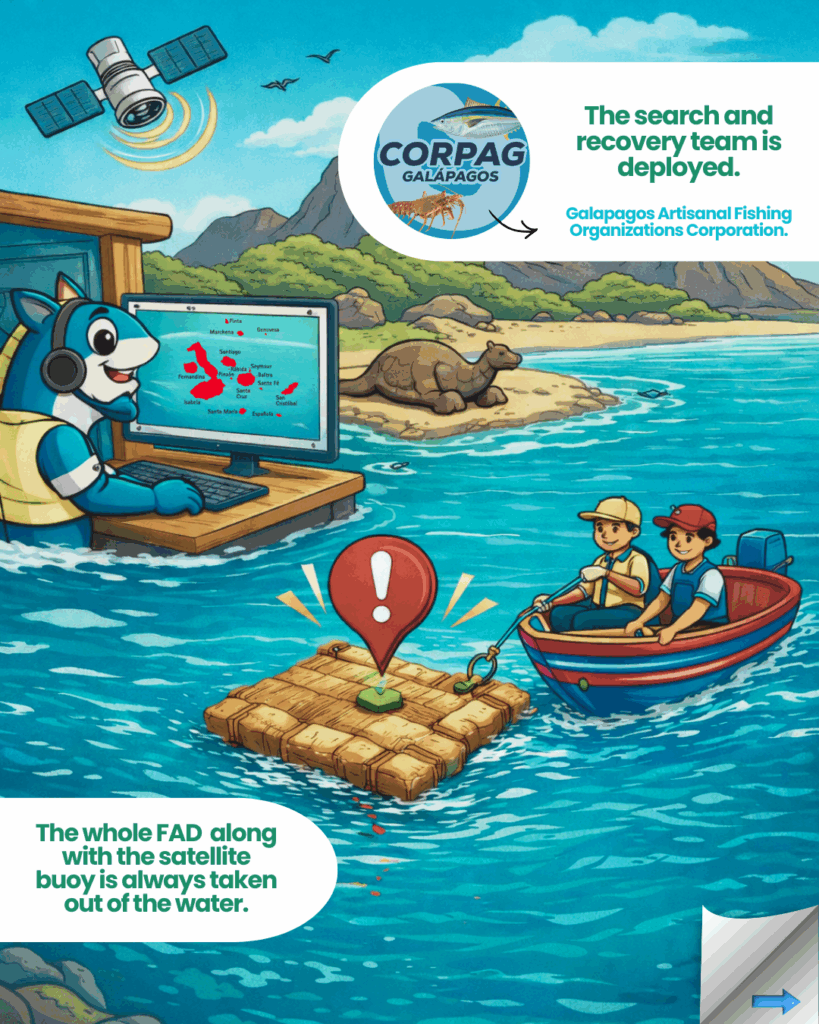
“Cuidando Galápagos” is activated through an alert protocol supported by satellite monitoring, trajectory analysis, and direct coordination with the associated fleet. When a potential drift or grounding risk is detected, coordination is triggered with a local recovery team in the islands—made up of artisanal fishing organizations linked to CORPAG—which carries out search and retrieval operations at sea.

Limited incidence and verifiable traceability
Depending on the time of year, the fleet associated with TUNACONS operates in areas close to the Galápagos Marine Reserve; however, project data show that the incidence of FADs within the Reserve is very low. On average, between 12 and 15 reports per year involve FADs with a potential risk of grounding.

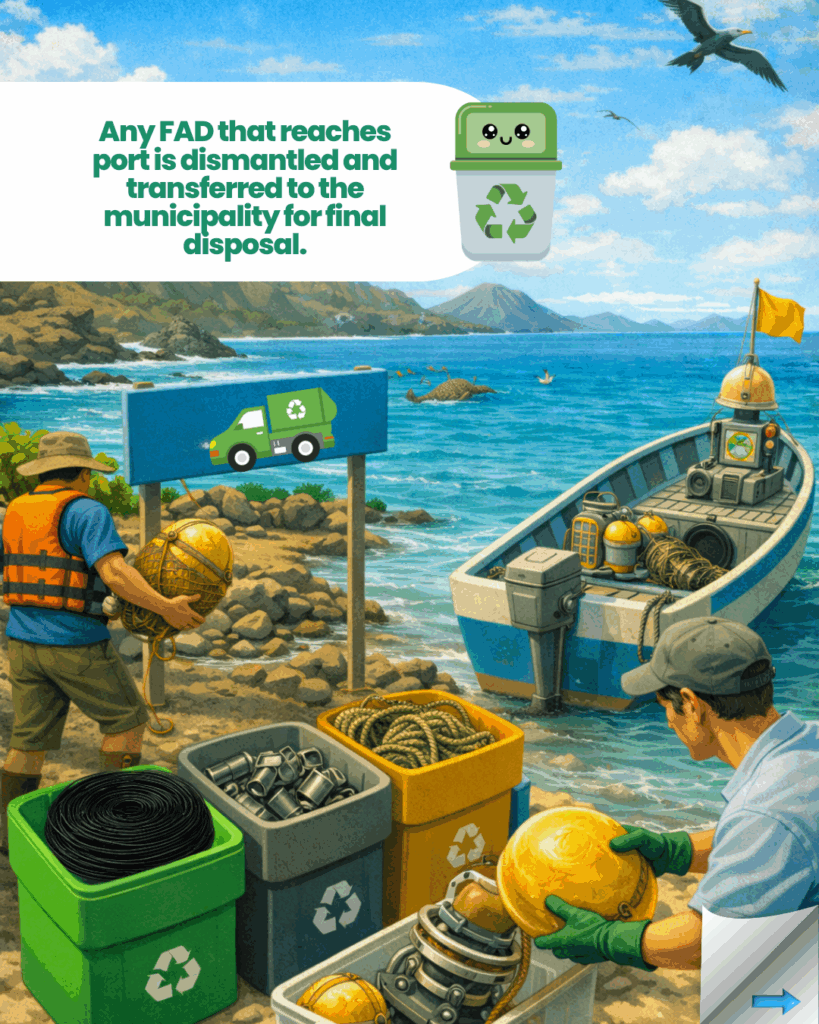
Recovery efforts include the entire FAD structure and its associated satellite buoy, ensuring complete removal of the device from the marine environment, maintaining traceability, and preventing residual impacts.

An operational challenge affecting tracking
As part of its technical assessment, TUNACONS has identified practices that hinder preventive recovery: along certain navigation routes, some vessels—whether engaged in tourism or other activities—remove or cut the satellite buoys from FADs found in other areas of the Reserve. Once the buoy is removed, the FAD can no longer be tracked, reducing localization capacity and increasing the risk of drift.

TUNACONS emphasizes that traceability is an essential component of environmental management, and any intervention that eliminates satellite tracking weakens preventive efforts.

Innovation to reduce impacts: biodegradable, non-entangling EcoFAD
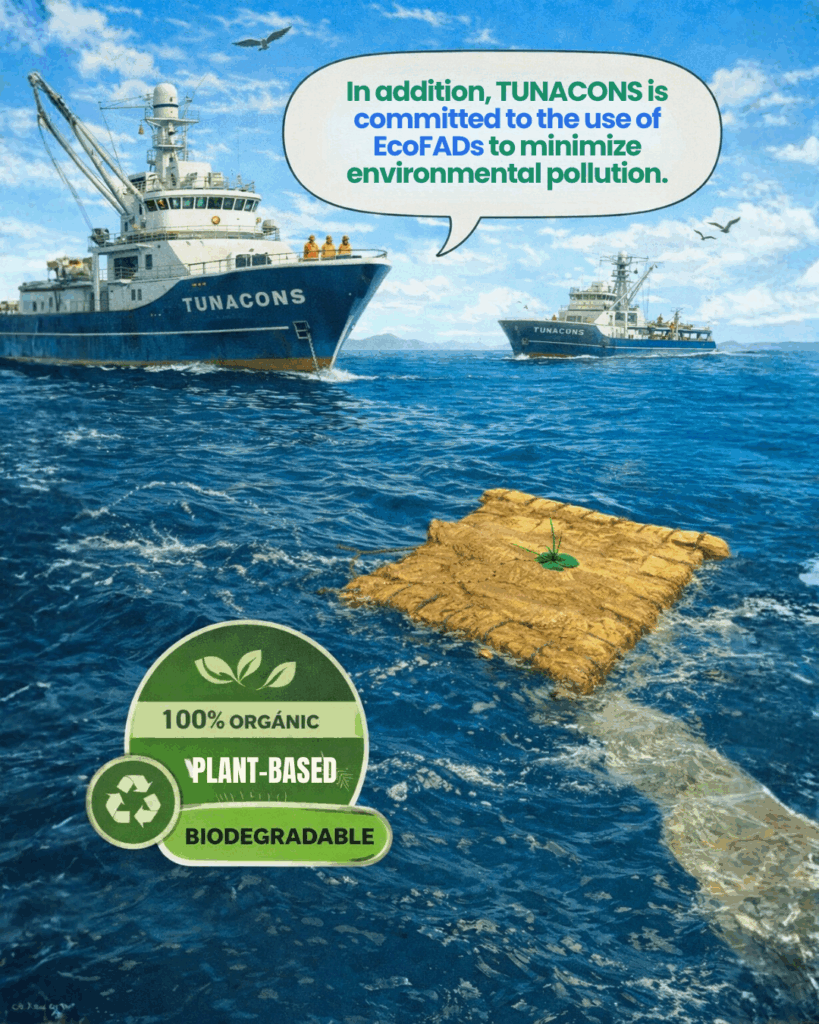
In parallel with preventive recovery, TUNACONS is advancing structural solutions to reduce impacts associated with FADs. The Foundation has developed an EcoFAD prototype made from plant-based materials that is 100% biodegradable and non-entangling, with no plastic components. This innovation supports the gradual elimination of synthetic materials in fishing and reinforces the initiative’s preventive approach.

Institutional statement
Guillermo Morán Velásquez, representative of TUNACONS, stated that the work in Galápagos is grounded in evidence, clear protocols, and on-the-ground action, with local participation and verifiable preventive measures. He added that the program’s operational experience has enabled expanded cooperation and the promotion of similar actions in other areas of the Pacific.

Morán Velásquez also noted that some publications continue to use headlines and content describing alleged severe damage in the Reserve without adequately reflecting the available evidence or the preventive and remedial efforts implemented by the associated fleet. In this context, he underscored that Ecuador’s tuna industry within TUNACONS maintains the Marine Stewardship Council (MSC) sustainability certification, one of the most widely recognized worldwide.
TUNACONS fortalece la protección de Galápagos con recuperación preventiva de plantados y soluciones biodegradables

Galápagos, Ecuador — 11 de febrero de 2026.

La Fundación TUNACONS mantiene en operación la iniciativa “Cuidando Galápagos”, que incluye un esquema de prevención y respuesta temprana orientado a reducir riesgos ambientales asociados a la deriva de plantados (FADs) y a reforzar la protección de ecosistemas sensibles del Archipiélago.

Un protocolo operativo basado en monitoreo y acción local

“Cuidando Galápagos” se activa mediante un protocolo de alertas sustentado en monitoreo satelital, análisis de trayectorias y coordinación directa con la flota asociada. Cuando se detecta un posible riesgo de deriva o varamiento, se activa la coordinación con un equipo local de recuperación en las islas, integrado por organizaciones pesqueras artesanales vinculadas a CORPAG, que ejecuta labores de búsqueda y retiro en el mar.

Incidencia acotada y trazabilidad verificable

La flota vinculada a TUNACONS opera, según la época del año, en áreas cercanas a la Reserva Marina de Galápagos; sin embargo, con base en los datos del proyecto, la incidencia de plantados dentro de la Reserva es muy baja. En promedio, se registran entre 12 y 15 reportes anuales de plantados con potencial riesgo de varamiento.

La recuperación incluye TODA la estructura del plantado y su boya satelital asociada, con el objetivo de asegurar el retiro completo del artefacto del entorno marino, mantener la trazabilidad y evitar impactos residuales.

Un desafío operativo que afecta el rastreo

Como parte de su evaluación técnica, TUNACONS ha identificado prácticas que dificultan la recuperación preventiva: en determinadas rutas de navegación, algunas embarcaciones —ya sea de turismo u otras actividades— retiran o cortan boyas satelitales de plantados encontrados en otras zonas de la reserva. Cuando se remueve la boya, el plantado queda sin rastreo, lo que reduce la capacidad de localización y aumenta el riesgo de deriva.

TUNACONS señala que la trazabilidad es un componente esencial de la gestión ambiental y que cualquier intervención que elimine el rastreo satelital debilita los esfuerzos preventivos.

Innovación para reducir impactos: EcoFAD biodegradable y no enmallante

De manera complementaria a la recuperación preventiva, TUNACONS impulsa soluciones estructurales para reducir impactos asociados a los plantados. La Fundación cuenta con un prototipo de EcoFAD elaborado con materiales de origen vegetal, 100% biodegradable y no enmallante, sin plástico en sus componentes. Esta innovación apunta a la eliminación progresiva de materiales sintéticos en la pesca y refuerza el enfoque preventivo de la iniciativa.

Declaración institucional

Guillermo Morán Velásquez, representante de TUNACONS, indicó que el trabajo en Galápagos se sostiene en evidencia, protocolos claros y acción en territorio, con participación local y medidas preventivas verificables. Añadió que la experiencia operativa del programa ha permitido ampliar la cooperación y promover acciones similares en otras zonas del Pacífico.

Morán Velásquez señaló además que persisten publicaciones con títulos y contenidos que describen supuestos daños graves en la zona de la Reserva, sin reflejar adecuadamente la evidencia disponible ni los esfuerzos preventivos y de remediación impulsados por la flota asociada. En ese contexto, destacó que la industria atunera ecuatoriana que integra TUNACONS mantiene la certificación de sostenibilidad pesquera del Marine Stewardship Council (MSC), considerada una de las más reconocidas a nivel mundial.

Para más información no dude en contactarnos:

gmoran@tunacons.org, mzambrano@tunacons.org, http://wa.me/593984814782
FADS RETRIEVAL GALAPAGOS

TUNACONS stärkt den Schutz der Galápagos-Inseln durch präventive Bergung von FADs und biologisch abbaubare Lösungen
Galápagos, Ecuador — 11. Februar 2026.

Die Stiftung TUNACONS setzt die Initiative „Cuidando Galápagos“ fort, die ein System zur Prävention und frühzeitigen Reaktion umfasst. Ziel ist es, Umweltrisiken im Zusammenhang mit der Drift von Fischsammlergeräten (FADs) zu reduzieren und den Schutz sensibler Ökosysteme des Archipels zu stärken.

Operatives Protokoll auf Basis von Monitoring und lokalem Handeln
„Cuidando Galápagos“ wird durch ein Alarmprotokoll aktiviert, das auf satellitengestütztem Monitoring, der Analyse von Driftverläufen und einer direkten Koordination mit der angeschlossenen Flotte basiert. Wird ein potenzielles Risiko von Drift oder Strandung erkannt, erfolgt die Abstimmung mit einem lokalen Bergungsteam auf den Inseln. Dieses Team setzt sich aus handwerklichen Fischereiorganisationen zusammen, die mit CORPAG verbunden sind, und führt Such- und Bergungsmaßnahmen auf See durch.

Begrenzte Vorkommnisse und überprüfbare Rückverfolgbarkeit
Die mit TUNACONS verbundene Flotte operiert je nach Jahreszeit in Gebieten nahe dem Galápagos-Meeresreservat. Auf Grundlage der Projektdaten ist das Auftreten von FADs innerhalb des Reservats jedoch sehr gering. Im Durchschnitt werden jährlich zwischen 12 und 15 Meldungen von FADs mit potenziellem Strandungsrisiko registriert.
Die Bergung umfasst stets die vollständige Struktur des FADs sowie die zugehörige Satellitenboje, um eine vollständige Entfernung des Geräts aus der Meeresumwelt sicherzustellen, die Rückverfolgbarkeit zu gewährleisten und verbleibende Auswirkungen zu vermeiden.

Operative Herausforderungen beim Tracking
Im Rahmen der technischen Evaluierung hat TUNACONS Praktiken identifiziert, die eine präventive Bergung erschweren: Auf bestimmten Schifffahrtsrouten entfernen oder durchtrennen einige Schiffe — sei es aus dem Tourismussektor oder aus anderen Aktivitäten — die Satellitenbojen von FADs, die in anderen Bereichen des Reservats gefunden werden. Wird die Boje entfernt, ist das FAD nicht mehr nachverfolgbar, was die Lokalisierungskapazität verringert und das Risiko unkontrollierter Drift erhöht.
TUNACONS weist darauf hin, dass Rückverfolgbarkeit ein wesentlicher Bestandteil des Umweltmanagements ist und dass jede Maßnahme, die das satellitengestützte Tracking eliminiert, präventive Bemühungen erheblich schwächt.

Innovation zur Reduzierung von Umweltauswirkungen: biologisch abbaubares, nicht verfangendes EcoFAD
Ergänzend zur präventiven Bergung fördert TUNACONS strukturelle Lösungen zur Reduzierung der mit FADs verbundenen Umweltauswirkungen. Die Stiftung verfügt über einen EcoFAD-Prototyp aus pflanzlichen Materialien, der zu 100 % biologisch abbaubar und nicht verfangend ist und keinerlei Kunststoffkomponenten enthält. Diese Innovation zielt auf die schrittweise Eliminierung synthetischer Materialien in der Fischerei ab und stärkt den präventiven Ansatz der Initiative.

Institutionelle Erklärung
Guillermo Morán Velásquez, Vertreter von TUNACONS, erklärte, dass die Arbeit auf den Galápagos-Inseln auf belastbaren Daten, klaren Protokollen und konkreten Maßnahmen vor Ort beruht, mit lokaler Beteiligung und überprüfbaren Präventionsmaßnahmen. Er ergänzte, dass die operative Erfahrung des Programms es ermöglicht habe, die Zusammenarbeit auszuweiten und ähnliche Initiativen in anderen Regionen des Pazifiks zu fördern.
Morán Velásquez wies zudem darauf hin, dass weiterhin Veröffentlichungen mit Überschriften und Inhalten kursieren, die angebliche schwerwiegende Schäden im Gebiet des Reservats beschreiben, ohne die verfügbare Evidenz sowie die präventiven und sanierenden Maßnahmen der angeschlossenen Flotte angemessen widerzuspiegeln. In diesem Zusammenhang betonte er, dass die ecuadorianische Thunfischindustrie, die in TUNACONS organisiert ist, die Nachhaltigkeitszertifizierung des Marine Stewardship Council (MSC) aufrechterhält, eine der weltweit anerkanntesten Zertifizierungen für nachhaltige Fischerei.

Für weitere Informationen kontaktieren Sie bitte:
gmoran@tunacons.org, mzambrano@tunacons.org, http://wa.me/593984814782
FADS RETRIEVAL GALAPAGOS 2
FADS RETRIEVAL GALAPAGOS
fad fish aggregating device

🌊 Ecuador führt mit über 5.000 nachhaltigen Lockbojen im Pazifik

Tunacons setzt weltweit Maßstäbe für verantwortungsvolle Fischerei

Die ecuadorianische Initiative Tunacons hat ihre Führungsrolle in der nachhaltigen Fischerei gefestigt: In den letzten vier Jahren wurden mehr als 5.000 nachhaltige Lockbojen (ECOfads) im östlichen Pazifik ausgesetzt. Diese biologisch abbaubaren, nicht verschmutzenden und nicht-verfangenden Geräte stellen eine wahre Revolution im Thunfischfang dar – mit vollem Respekt gegenüber der marinen Artenvielfalt.

Direktor Guillermo Morán erklärte im Interview mit Radio WQ, dass dieser Wandel weder einfach noch spontan war: „Es waren Jahre der Forschung, über zwei Millionen Dollar an Investitionen, viele Tests auf See und eine enge Zusammenarbeit mit den Kapitänen nötig.“ Das Ergebnis war ein effizientes, umweltfreundliches und wirtschaftlich tragfähiges Prototyp, das inzwischen in Serie produziert wird.

Ab 2026 wird die Verwendung dieser Lockbojen für die gesamte Thunfischflotte im östlichen Pazifik verpflichtend – laut einer Resolution der Interamerikanischen Kommission für Tropischen Thunfisch (IATTC). „Wir sind nicht nur Vorreiter in Ecuador, sondern weltweit. Das wurde auch in internationalen Foren anerkannt, wo Kapitäne und Experten aus Asien, Europa und Nordamerika uns zustimmen“, betonte Morán.

Ein großer Erfolg war der Bewusstseinswandel bei den Kapitänen. Anfangs gab es Zweifel, ob die neuen Bojen die Produktivität verringern würden. Heute berichten viele von besseren Fangergebnissen mit den ECOfads. Durch den Einsatz natürlicher Materialien wie Abacá, Balsa und organischem Kautschuk aus Ecuador konnte die Lebensdauer der Bojen auf fast fünf Monate erhöht werden – ohne das Ökosystem zu belasten.

Diese Entwicklung hat auch neue internationale Märkte erschlossen, insbesondere in Europa. Länder wie Deutschland, Norwegen und die Niederlande legen großen Wert auf verantwortungsvolle Praktiken und Zertifizierungen wie das Marine Stewardship Council (MSC). Die Transformation nützt nicht nur den 58 industriellen Tunacons-Schiffen, sondern positioniert Ecuador als weltweites Vorbild in Sachen Nachhaltigkeit.

„Das ist kein bloßes Versprechen – es ist überprüfbare Realität. Wir wurden auf Messen, Foren und internationalen Veranstaltungen für unsere Arbeit gelobt. Unser Ziel ist es, noch mehr Partner zu gewinnen und diese guten Praktiken weltweit zu verbreiten“, schloss Morán.

fad fish aggregating device

Ecuador leads with over 5,000 sustainable FADs in the Pacific

Tunacons sets a global milestone in responsible fishing innovation

The Ecuadorian initiative Tunacons has solidified its leadership in sustainable fishing after deploying over 5,000 sustainable fish aggregating devices (ECOfads) in the eastern Pacific Ocean over the past four years. These FADs—biodegradable, non-polluting, and non-entangling—represent a revolution in tuna fishing, with full respect for marine biodiversity.

Tunacons director Guillermo Morán stated in an interview with Radio WQ that this transformation was neither simple nor improvised: “It took years of research, more than two million dollars in investment, numerous at-sea trials, and strong cooperation with fishing captains.” The process culminated in the development of an efficient, eco-friendly, and viable prototype that is now being produced at scale.

Starting in 2026, the use of these FADs will be mandatory for the entire tuna fleet operating in the eastern Pacific, thanks to a resolution by the Inter-American Tropical Tuna Commission (IATTC). “We’re not only pioneers in Ecuador; we are leading globally. This has been acknowledged in international forums, where captains and experts from Asia, Europe, and North America agree we’re on the right track,” said Morán.

One of the greatest achievements has been the shift in mindset among captains. Initially hesitant, fearing lower productivity, many now report better fishing results with ECOfads. Thanks to natural materials like abacá, balsa, and organic rubber—all sourced in Ecuador—the lifespan of these FADs has been extended to nearly five months without harming the marine environment.

Moreover, this innovation has opened new international markets, especially in Europe, where countries like Germany, Norway, and the Netherlands value responsible practices and certifications like the Marine Stewardship Council (MSC). The transformation benefits not only the 58 industrial vessels in the Tunacons fleet but also positions Ecuador as a global benchmark in sustainability.

“This is not just a speech—it’s a verifiable reality. We’ve presented at fairs, forums, and international events where Ecuador’s work has been recognized. Our goal is to keep growing partnerships and expand these best practices beyond our borders,” Morán concluded.

fad fish aggregating device

🌊 Ecuador lidera con más de 5.000 plantados sostenibles en el Pacífico

Tunacons marca un hito mundial en innovación pesquera responsable

La iniciativa ecuatoriana Tunacons ha consolidado su liderazgo en sostenibilidad pesquera tras desplegar más de 5.000 dispositivos de pesca sostenibles (ECOfads) en el océano Pacífico oriental durante los últimos cuatro años. Estos plantados —biodegradables, no contaminantes y no enmallantes— representan una revolución en la forma en que se captura el atún, respetando al máximo la biodiversidad marina.

El director de Tunacons, Guillermo Morán, destacó en entrevista con Radio WQ que esta transformación no ha sido sencilla ni improvisada: “Fueron años de investigación, más de dos millones de dólares en inversión, múltiples pruebas en el mar y una cooperación activa con los capitanes de pesca”. Este proceso culminó en el desarrollo de un prototipo eficiente, ecológico y viable, cuya producción en serie ya ha comenzado.

A partir de 2026, el uso de estos plantados será obligatorio para toda la flota atunera que opera en el Pacífico oriental, gracias a una resolución de la Comisión Interamericana del Atún Tropical (CIAT). “No solo somos pioneros en Ecuador, lo somos a nivel mundial. Y eso ha sido reconocido en foros internacionales donde capitanes y expertos de Asia, Europa y Norteamérica coinciden en que vamos por el camino correcto”, aseguró Morán.

Uno de los mayores logros de este proceso ha sido el cambio de mentalidad entre los propios capitanes. Inicialmente reticentes por temor a reducir su productividad, hoy muchos afirman estar obteniendo mejores resultados con los ECOfads. Gracias al uso de materiales naturales como abacá, balsa y caucho orgánico producidos en Ecuador, se ha logrado extender la vida útil de los plantados hasta cinco meses sin comprometer el entorno marino.

Además, este avance ha abierto nuevos mercados internacionales, especialmente en Europa, donde países como Alemania, Noruega y Holanda valoran altamente las prácticas responsables y certificaciones como la del Marine Stewardship Council (MSC). La transformación no solo beneficia a la flota de Tunacons —compuesta por 58 barcos industriales— sino que posiciona a Ecuador como un referente global en sostenibilidad.

“Esto no es un discurso, es una realidad comprobable. Hemos hecho presentaciones en ferias, foros y espacios internacionales donde el trabajo ecuatoriano ha sido reconocido. Nuestro objetivo es seguir sumando aliados y expandiendo estas buenas prácticas más allá de nuestras fronteras”, concluyó Morán.

plantados degradables ecofad fad tuna fishery

Ecuador Leads Sustainable Fishing with ECOfads

Guayaquil. Ecuador’s tuna industry, a source of national pride and a benchmark in the Eastern Pacific, is now at the forefront of sustainability thanks to the work of the Tunacons Foundation. Under the leadership of Guillermo Morán, Tunacons has deployed over 5,000 biodegradable ECOfads—eco-friendly fish aggregating devices (FADs)—that are transforming tuna fishing by minimizing environmental impact and promoting responsible practices.


What Are FADs and Why Are They Important?

Morán explains that FADs are floating structures that attract tuna, which tend to gather around objects drifting at sea, such as logs or even marine animals. “Over 20 years ago, captains discovered that tuna would gather around floating objects. They began experimenting with artificial prototypes, which boosted productivity,” says Morán.

However, early versions used non-degradable materials, contributing to ocean pollution and threatening species like sharks and turtles. Tunacons revolutionized this practice with ECOfads—FADs made from 100% biodegradable, plant-based materials such as Ecuadorian abacá fiber, bamboo-like caña guadúa, balsa wood, and organic rubber.


Sustainability and Innovation at Scale

The goal is not just higher efficiency but sustainability: “We don’t want FADs to entangle sharks or turtles; they should only attract tuna while avoiding marine pollution,” Morán stresses.

The 5,000 ECOfads, measuring 2 to 3 meters, are deployed from vessels in Ecuador, Panama, and the United States, covering waters from the Galápagos to the Central Pacific. Equipped with sonar, these FADs allow captains to detect tuna schools in real time, optimizing operations and reducing fuel consumption—a key advantage after the removal of fuel subsidies.


International Certification and Competitiveness

This initiative is part of a broader sustainability program that has earned Tunacons the prestigious Marine Stewardship Council (MSC) certification, a globally recognized standard for responsible fishing.

“The MSC label is the reward for our effort. It sets Ecuadorian tuna apart—not just for its taste and quality but for being environmentally responsible,” highlights Morán.


Beyond FADs: A Broader Commitment to the Oceans

Tunacons’ sustainability initiatives include:

  • Releasing sharks, turtles, and manta rays caught incidentally, with trained crews ensuring their safe return to the sea.
  • Recycling tuna fishing nets, sending over 600 tons annually to Chile for processing.
  • Cleaning coastal mangroves, in partnership with artisanal fishers, removing up to 30 tons of plastic in areas near Guayaquil.

According to Morán, “Fishing must not only be abundant; it must be sustainable.”


Building Ocean Awareness

Morán emphasizes that sustainability is a collective responsibility: “Marine pollution mostly comes from cities. We must protect our oceans because we feed the world with a healthy, high-quality product. Sustainability isn’t just a business strategy; it’s a shared commitment.”


Conclusion

The ECOfads initiative positions Ecuador as a regional leader in sustainable tuna fishing and sets a global precedent. In Morán’s words: “This is an unprecedented program worldwide. Just as we are leaders in tuna exports, we must lead in sustainability.”

Mangroven sind nicht einfach nur Bäume.

Mangroven sind nicht einfach nur Bäume.

Bei TUNACONS haben wir gemeinsam mit Fenacopec einen weiteren inspirierenden – und zugleich sehr aufrüttelnden – Tag erlebt.
Während wir Mangroven pflanzten und Plastikmüll sammelten, sahen wir mit eigenen Augen das Ausmaß des Problems: Tonnen von Abfällen, die sich in den Wurzeln dieses lebenswichtigen Ökosystems verfangen haben.

Ein Ökosystem, das uns Leben schenkt…
Und das, obwohl es dafür nie gedacht war, heute als natürlicher Filter wirkt, der verhindert, dass unser Müll ins offene Meer gelangt.

Dieser Müll erscheint nicht einfach so. Er stammt aus unseren Städten, die ganz in der Nähe liegen – Orte, an denen wir noch längst nicht genug tun, um den Plastikkonsum zu verringern.

Diese Verschmutzung trifft auch die Gemeinden im Golf von Guayaquil, die zudem ohne grundlegende Dienstleistungen auskommen müssen: kein Wasser, kein Strom, keine Müllabfuhr und noch weniger Sicherheit.

Mangroven sind nicht einfach nur Bäume.
Sie sind Zuhause, Nahrung und Schutz für Tausende von Familien und Arten.

Doch heute rufen die Mangroven um Hilfe. Und dieser Hilferuf ist dringend.

Der Golf von Guayaquil ist kein gewöhnliches Ökosystem:
✅ Seine Mangroven speichern mehr Kohlenstoff als tropische Regenwälder und helfen so im Kampf gegen den Klimawandel.
✅ Sie schützen unsere Küsten vor Stürmen und Erosion und dienen sogar der Stadt Guayaquil als natürlicher Schutzschild.
✅ Sie beherbergen eine einzigartige Artenvielfalt – in ihrer Fülle vergleichbar, wenn auch anders geformt, mit der der Galápagos-Inseln.

Bei TUNACONS setzen wir uns mit Nachdruck für den Schutz dieser Ökosysteme ein und für das Wohlergehen der handwerklichen Fischer, die von ihnen abhängen.
Aber wir können das nicht allein schaffen. Es braucht mehr Unterstützung von den Verantwortlichen in öffentlichen Institutionen, um diese Realität grundlegend zu verändern – ebenso wie vom privaten Sektor und der organisierten Zivilgesellschaft, die alle von den Leistungen der Mangroven profitieren.

Mangroven zu schützen – und die Menschen, die von ihnen leben – ist eine gemeinsame Verantwortung.

Denn dieser Planet gehört nicht nur wenigen…
Diese Welt gehört uns allen.

mangroves are calling for help

Mangroves are calling for help

At TUNACONS, we experienced another inspiring – and very revealing – day alongside Fenacopec.
As we planted mangroves and collected plastic waste, we saw with our own eyes the scale of the problem: tonnes of rubbish trapped among the roots of this vital ecosystem.

An ecosystem that gives us life…
And although it wasn’t created for this purpose, it now acts as a natural filter, stopping our waste from reaching the open sea.

This rubbish doesn’t appear by magic. It comes from our cities, located very close to these areas, where we are still not doing enough to reduce plastic use.

This pollution also affects the communities of the Gulf of Guayaquil, who are already struggling without basic services: no clean water, no electricity, no waste collection, and even less security.

Mangroves are not just trees.
They are home, food, and protection for thousands of families and species.

But today, the mangroves are calling for help. And their call is urgent.

The Gulf of Guayaquil is no ordinary ecosystem:
✅ Its mangroves store more carbon than tropical forests, helping to combat climate change.
✅ They protect our coasts from storms and erosion, acting as natural shields even for the city of Guayaquil.
✅ They harbour a unique biodiversity, comparable in richness – though different in form – to that of the Galápagos Islands.

At TUNACONS, we are deeply committed to protecting these ecosystems and supporting the wellbeing of the artisanal fishers who depend on them.
But we can’t do it alone. We need more support from public institutions that must help change this current reality, as well as from the private sector and organised civil society, who all benefit from the services mangroves provide.

Protecting mangroves – and the people who live from them – is a shared responsibility.

Because this planet doesn’t belong to just a few…
This world belongs to all of us.

Día de la Conservación del Ecosistema Manglar

Siembra de manglares y minga de plásticos

En tunacons vivimos una nueva jornada inspiradora y también, muy reveladora  junto a Fenacopec…
Mientras sembramos manglar y recogemos plásticos, vimos con nuestros propios ojos la magnitud del problema: toneladas de basura atrapadas entre las raíces de este ecosistema vital. 

Un ecosistema que nos da vida…

Y que, aunque no fue creado para ello, hoy actúa como un filtro natural que impide que nuestros desechos lleguen al mar abierto.

Esa basura no aparece por arte de magia. Llega desde nuestras ciudades que estan muy cerca de este ecosistema, donde aún no hacemos lo suficiente para reducir el uso de plásticos.

Esta basura también afectan a las comunidades del Golfo de Guayaquil que además sobreviven sin servicios básicos: sin agua, sin luz, sin recolección de residuos y menos aún seguridad.

Los manglares no son solo árboles 

Son hogar, alimento y protección para miles de familias y especies.

Pero hoy, los manglares nos están pidiendo ayuda. Y nos piden auxilio urgente.

Y el Golfo de Guayaquil no es cualquier ecosistema:
✅Sus manglares almacenan más carbono que los bosques tropicales, ayudando a frenar el cambio climático.
✅  Protegen nuestras costas de tormentas y erosión, actuando como escudos naturales de nuestras poblaciones costeras incluso  de Guayaquil.
✅ Albergan una biodiversidad única, comparable en riqueza –aunque distinta en forma– a la de las Islas Galápagos.

En TUNACONS estamos comprometidos con la protección de estos ecosistemas y con el bienestar de los pescadores artesanales que dependen de ellos.

Pero no podemos hacerlo solos, se requiere más apoyo de los responsables de instituciones públicas que deben ayudar a que este panorama actual cambie radicalmente a futuro, y el sector privado con la sociedad civil organizada que se benefician de los servicios que brindan los manglares, Cuidar los manglares, y cuidar a quienes viven de ellos, es un deber compartido.
Porque este planeta no es de unos pocos…
Este mundo es de todos.

dia del manglar

Día Internacional por la conservación del ecosistema manglar

En tunacons vivimos una nueva jornada inspiradora y también, muy reveladora junto a Fenacopec…
Mientras sembramos manglar y recogemos plásticos, vimos con nuestros propios ojos la magnitud del problema: toneladas de basura atrapadas entre las raíces de este ecosistema vital.
Un ecosistema que nos da vida…
Y que, aunque no fue creado para ello, hoy actúa como un filtro natural que impide que nuestros desechos lleguen al mar abierto.
Esa basura no aparece por arte de magia. Llega desde nuestras ciudades que estan muy cerca de este ecosistema, donde aún no hacemos lo suficiente para reducir el uso de plásticos.
Esta basura también afectan a las comunidades del Golfo de Guayaquil que además sobreviven sin servicios básicos: sin agua, sin luz, sin recolección de residuos y menos aún seguridad.
Los manglares no son solo árboles
Son hogar, alimento y protección para miles de familias y especies.
Pero hoy, los manglares nos están pidiendo ayuda. Y nos piden auxilio urgente.
Y el Golfo de Guayaquil no es cualquier ecosistema:
✅Sus manglares almacenan más carbono que los bosques tropicales, ayudando a frenar el cambio climático.
✅ Protegen nuestras costas de tormentas y erosión, actuando como escudos naturales de nuestras poblaciones costeras incluso de Guayaquil.
✅ Albergan una biodiversidad única, comparable en riqueza –aunque distinta en forma– a la de las Islas Galápagos.
En TUNACONS estamos comprometidos con la protección de estos ecosistemas y con el bienestar de los pescadores artesanales que dependen de ellos.
Pero no podemos hacerlo solos, se requiere más apoyo de los responsables de instituciones públicas que deben ayudar a que este panorama actual cambie radicalmente a futuro, y el sector privado con la sociedad civil organizada que se benefician de los servicios que brindan los manglares,
Cuidar los manglares, y cuidar a quienes viven de ellos, es un deber compartido.
Porque este planeta no es de unos pocos…
Este mundo es de todos.

fad fish aggregating device

Ecuador marca un hito en sostenibilidad atunera con ECOfads 100% biodegradables

La pesca ecuatoriana vive un momento histórico. Según Guillermo Morán, director de la fundación Tunacons, el año 2024 marcó un récord en capturas, especialmente de atún barrilete, gracias a condiciones climáticas favorables tras los fenómenos de El Niño y La Niña.

“Fue un año positivo para toda la cadena atunera. Las corrientes marinas trajeron mayor abundancia de especies, y las medidas de conservación ayudaron a mantener esta riqueza”, explicó Morán en una entrevista para Radio Cristal.


La sostenibilidad como prioridad

Morán recordó que la flota atunera de Ecuador opera bajo estrictas medidas de conservación establecidas por la Comisión Interamericana del Atún Tropical (CIAT):
Épocas de veda y límites de captura
Observadores científicos en cada barco
Monitoreo de tallas y peso de las especies

Además, Tunacons logró la certificación del Marine Stewardship Council (MSC), un sello internacional que avala la pesca responsable y mejora la competitividad en mercados como la Unión Europea, el principal destino del atún ecuatoriano.


ECOfads: innovación y responsabilidad con el océano

El mayor avance tecnológico ha sido el desarrollo de los ECOfads: plantados artificiales que atraen atunes de forma eficiente pero sin contaminar ni poner en riesgo a otras especies.

“Ecuador es líder mundial en el uso de ECOfads. Son 100% biodegradables y no enmallantes. Están hechos con materiales vegetales producidos en el país como abacá, caña de azúcar, palo de balsa y caucho orgánico”, destacó Morán.

Estos dispositivos han transformado la pesca:
80% de las capturas ecuatorianas se realizan con plantados
Más de 5.000 ECOfads desplegados en el Pacífico
Reducción de riesgos para tiburones, tortugas y mantarrayas


Ecuador, referente mundial en pesca responsable

“Nuestro compromiso es alimentar al mundo con un producto sano y al mismo tiempo cuidar el océano. Así como lideramos la exportación de atún, debemos liderar la sostenibilidad”, concluyó Morán.

Con iniciativas como esta, Ecuador no solo consolida su posición como uno de los principales exportadores de atún, sino que también se convierte en un ejemplo global de pesca responsable.

Proudly powered by Wpopal.com