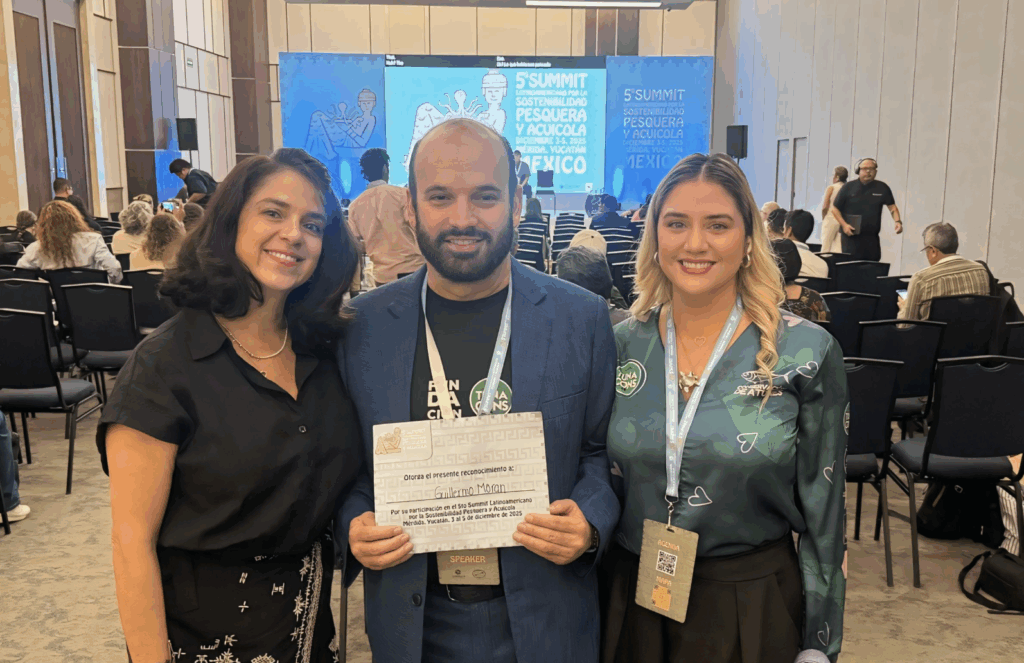
TUNACONS actively participated in the Fifth Latin American Summit on Fisheries and Aquaculture Sustainability, held in Mérida, Mexico—an event that brought together more than 500 representatives from 16 countries and featured over 150 speakers, including industry leaders, government authorities, NGOs, academia and international organizations.
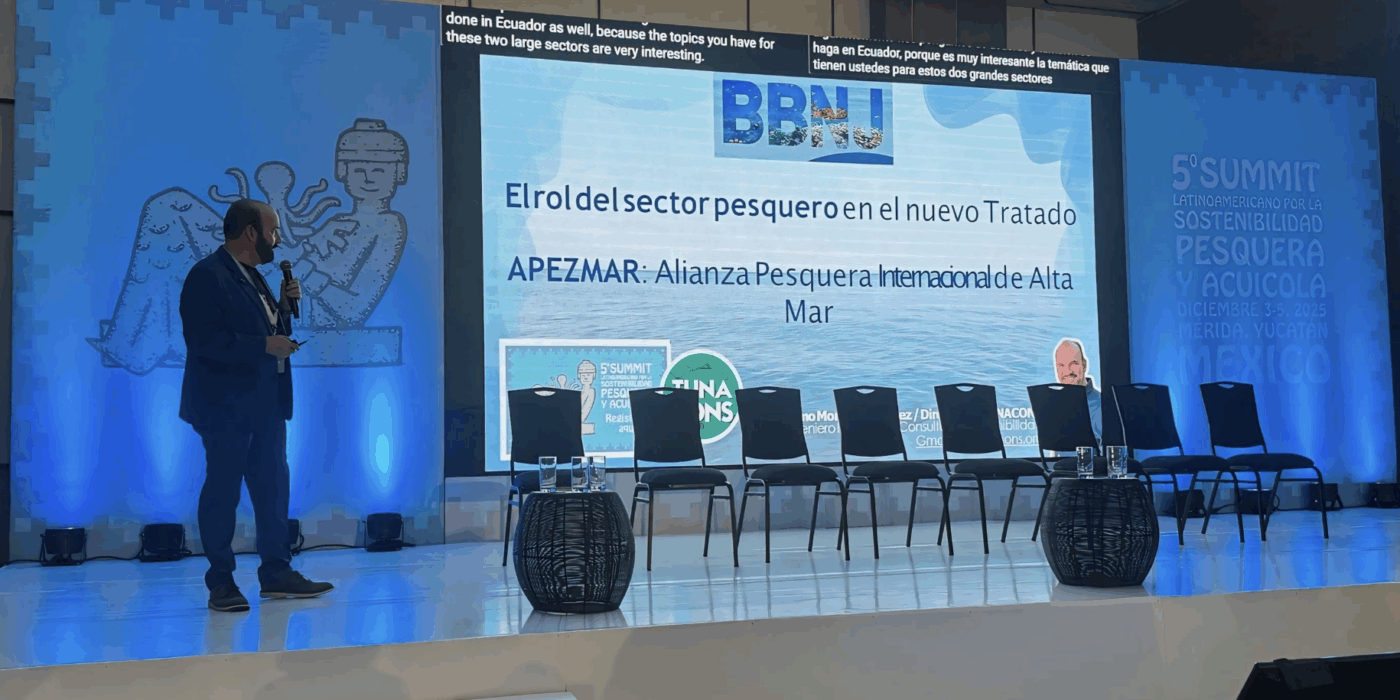
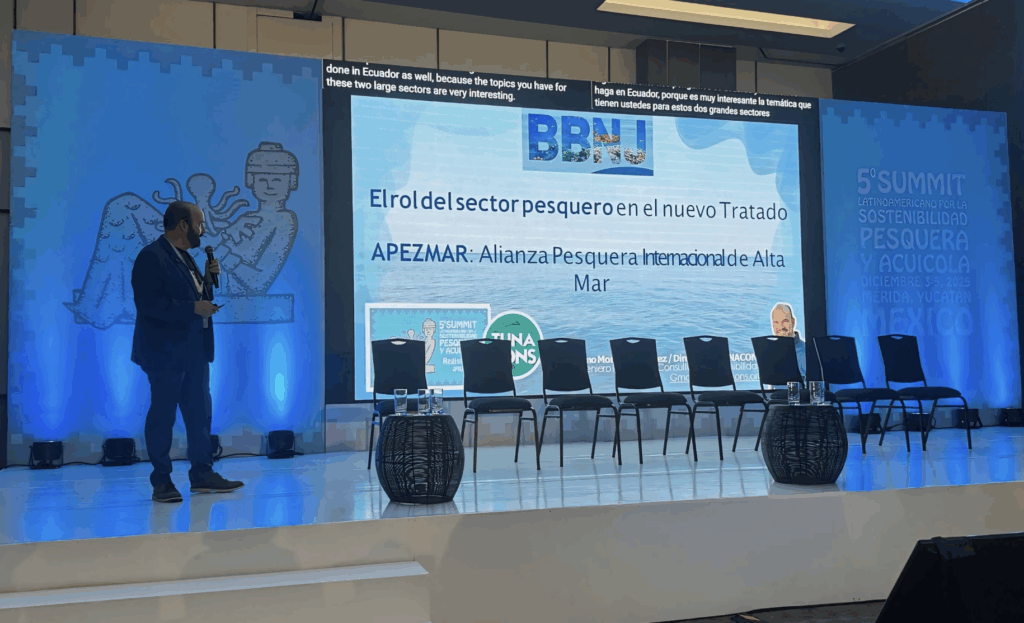
Our Executive Director, Guillermo Morán Velásquez, took part in a panel addressing the BBNJ Treaty (Biodiversity Beyond National Jurisdiction) and the role of the fishing sector. He highlighted the importance of ensuring that any new measures in areas beyond national jurisdiction are grounded in robust science and are fully compatible with the regulations of the Regional Fisheries Management Organizations (RFMOs) such as IATTC, SPRFMO, WCPFC, CCAMLR, among others.
During his intervention, Morán emphasized that coordination with RFMOs must not be symbolic; it must be binding and technically sound to avoid duplication, unjustified restrictions, or negative socioeconomic impacts on fleets operating legally and under internationally recognized sustainability standards.
Key Proposal: An International High Seas Fisheries Alliance (APESMAR)
One of the most relevant contributions presented during the summit was the proposal to establish an International High Seas Fisheries Alliance (APESMAR)—a coordination mechanism among industrial and artisanal fishing organizations, universities, research centers, and companies involved in responsible fishing across all interested countries.
The objective of this Alliance should be to:
Build a strong technical and legal position ahead of the first BBNJ COP.
Ensure that implementation of the treaty recognizes the value of sustainable fishing and its role in global food security.
Guarantee that any measures—such as the creation of high seas marine protected areas—are evaluated based on robust scientific evidence, while respecting RFMO decisions.
Unite the voice of the global fishing sector to prevent misinterpretations or inadequate applications of the treaty.
This initiative, emerging from Ecuador, underscores the importance of an international governance framework that meaningfully includes the productive sector in key ocean-related decisions—especially those who work directly at sea and promote responsible fishing practices.
Our Commitment
From Ecuador, TUNACONS reaffirms its commitment to achieving a sustainable, transparent and science-based fishing activity, with constructive participation in all forums that will shape the future of ocean conservation and sustainable use. We firmly believe that well-managed, responsible, and science-driven fisheries are an essential part of the solution to protect marine biodiversity for current and future generations.
We will continue working for a healthier Pacific, a more sustainable tuna fishery, and an international governance framework that listens to those who live from—and care for—the sea.
TUNACONS participó activamente en el Quinto Summit Latinoamericano de Sostenibilidad Pesquera y Acuícola, realizado en Mérida, México, un espacio que reunió a más de 500 representantes de 16 países y que contó con más de 150 ponentes entre líderes del sector, autoridades, ONG, academia y organismos internacionales.
Nuestro director ejecutivo, Guillermo Morán Velásquez, formó parte de un panel donde hablo del Tratado BBNJ (Biodiversidad Marina en Zonas Fuera de la Jurisdicción Nacional) y el rol del sector pesquero, donde expuso la importancia de que cualquier nueva medida en alta mar sea basada en ciencia robusta y obligatoriamente compatible con las regulaciones de las Organizaciones Regionales de Ordenación Pesquera (OROP) como CIAT, SPRFMO, WCPFC, CCAMLR, entre otras.
Durante su intervención, Morán enfatizó que la coordinación con las OROP no debe ser simbólica, sino vinculante y técnica, para evitar duplicidades, restricciones injustificadas o impactos socioeconómicos negativos en las flotas que operan legalmente y bajo estándares internacionales de sostenibilidad.
Propuesta clave: una Alianza Pesquera Internacional para la Alta Mar
Uno de los aportes más relevantes que mencionó en este encuentro fue proponer la creación de una Alianza Pesquera Internacional para la Alta Mar, un mecanismo de coordinación entre organizaciones del sector pesquero industrial y artesanal, universidades, centros de investigación y empresas vinculadas a la pesca responsable con todos los países interesados.
El objetivo de esta Alianza debería ser:
Construir una posición técnica y jurídica sólida previo a la primera COP del BBNJ.
Garantizar que la implementación del acuerdo reconozca el valor de la pesca sostenible y su rol en la seguridad alimentaria mundial.
Defender que cualquier medida —incluida la creación de áreas marinas protegidas en alta mar— sea evaluada con evidencia científica robusta, respetando las decisiones de las OROP.
Unificar la voz del sector pesquero a nivel global para evitar interpretaciones o aplicaciones inadecuadas del tratado.
Esta iniciativa que surge desde Ecuador destaca la importancia de una gobernanza internacional que incorpore al sector productivo en decisiones claves en los océanos, especialmente a quienes trabajan directamente en el océano y promueven prácticas responsables.
Nuestro compromiso
Desde Ecuador, TUNACONS reafirma su propósito de lograr una actividad pesquera sostenible, transparente y con participación constructiva en todos los foros que definirán el futuro de la conservación y uso sostenible de los océanos. Creemos firmemente que una pesca bien gestionada, científica y responsable es parte fundamental de la solución para proteger la biodiversidad marina para las actuales y futuras generaciones.
Continuamos trabajando por un Pacífico más sano, una actividad pesquera sostenible y por una gobernanza internacional que escuche a quienes viven y protegen el mar.
The TUNACONS Foundation has officially joined the Global Dialogue on Seafood Traceability (GDST) as a founding member, becoming part of a global alliance that promotes digital transformation in fisheries towards full, ethical, and sustainable traceability.
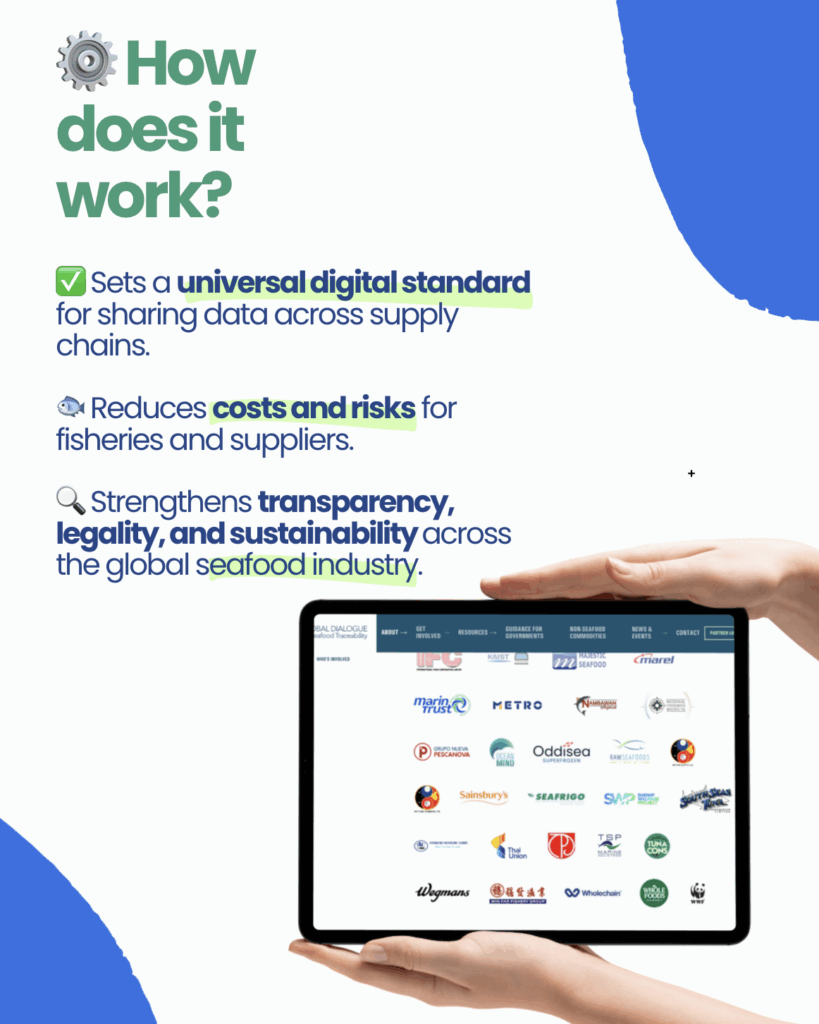
Initially created by the World Wildlife Fund (WWF) and the Institute of Food Technologists (IFT), the GDST brings together leaders from across the seafood supply chain — from fishing fleets to retailers — to establish a universal, digital, and interoperable traceability standard that ensures transparency throughout the seafood industry.
Through this membership, TUNACONS strengthens its commitment to transparency, traceability, and responsible fishing, consolidating Ecuador’s leadership in sustainable tuna fisheries. The foundation implements digital traceability systems across its Marine Stewardship Council (MSC)-certified fleet and promotes best practices throughout the tuna supply chain.
“The future of sustainable fishing is built on data, cooperation, and responsibility. Joining the GDST allows us to share our experience and contribute to the strengthening of international standards that ensure a more transparent and healthy ocean,” said Guillermo Morán, Executive Director of TUNACONS.
By participating in the GDST, TUNACONS will collaborate in shaping and advancing the global standard, supporting efforts to ensure that every seafood product can tell its complete story — from ocean to plate.
About TUNACONS: The TUNACONS Foundation unites eleven tuna companies from Ecuador, Panama, and the United States, all committed to sustainability and MSC certification. It leads innovations such as EcoFADs (biodegradable and non-entangling Fish Aggregating Devices), electronic monitoring, and onboard observer programs, contributing actively to marine conservation across the Eastern Pacific Ocean.
TUNACONS se une como miembro fundador al Global Dialogue on Seafood Traceability (GDST)
Guayaquil, Ecuador — septiembre de 2025. La Fundación TUNACONS ha sido reconocida como miembro fundador del Global Dialogue on Seafood Traceability (GDST), una alianza internacional que impulsa la transformación digital del sector pesquero hacia una trazabilidad total, ética y sostenible.
El GDST, originalmente creado por el World Wildlife Fund (WWF) y el Institute of Food Technologists (IFT), reúne a líderes de toda la cadena de valor de productos del mar —desde flotas pesqueras hasta minoristas— con el objetivo de establecer un estándar global digital e interoperable que garantice la transparencia en cada eslabón de la industria.
A través de su adhesión, TUNACONS refuerza su compromiso con la transparencia, la trazabilidad y la pesca responsable, consolidando el liderazgo de Ecuador en sostenibilidad pesquera. La fundación implementa sistemas de trazabilidad digital en su flota certificada por el Marine Stewardship Council (MSC) y promueve buenas prácticas a lo largo de toda la cadena de suministro del atún.
“El futuro de la pesca sostenible se construye con datos, cooperación y responsabilidad. Ser parte de GDST nos permite compartir nuestras experiencias y contribuir al fortalecimiento de estándares internacionales que garanticen un océano más transparente y saludable”, expresó Guillermo Morán, Director Ejecutivo de TUNACONS.
La participación en GDST permitirá a TUNACONS colaborar en el diseño y evolución del estándar global, apoyando así los esfuerzos internacionales por garantizar que cada producto pesquero pueda contar su historia completa —desde el océano hasta la mesa.
Sobre TUNACONS: La Fundación TUNACONS agrupa a once empresas atuneras de Ecuador, Panamá y Estados Unidos, comprometidas con la sostenibilidad y la certificación MSC. Desarrolla innovaciones como los EcoFADs (dispositivos de agregación de peces biodegradables y no enmallantes), el monitoreo electrónico y programas de observadores a bordo, contribuyendo activamente a la conservación marina en el Pacífico Oriental.
ENGLISH (UK)
TUNACONS joins the Global Dialogue on Seafood Traceability (GDST) as a Founding Member
Guayaquil, Ecuador — September 2025. The TUNACONS Foundation has officially joined the Global Dialogue on Seafood Traceability (GDST) as a founding member, becoming part of a global alliance that promotes digital transformation in fisheries towards full, ethical, and sustainable traceability.
Initially created by the World Wildlife Fund (WWF) and the Institute of Food Technologists (IFT), the GDST brings together leaders from across the seafood supply chain — from fishing fleets to retailers — to establish a universal, digital, and interoperable traceability standard that ensures transparency throughout the seafood industry.
Through this membership, TUNACONS strengthens its commitment to transparency, traceability, and responsible fishing, consolidating Ecuador’s leadership in sustainable tuna fisheries. The foundation implements digital traceability systems across its Marine Stewardship Council (MSC)-certified fleet and promotes best practices throughout the tuna supply chain.
“The future of sustainable fishing is built on data, cooperation, and responsibility. Joining the GDST allows us to share our experience and contribute to the strengthening of international standards that ensure a more transparent and healthy ocean,” said Guillermo Morán, Executive Director of TUNACONS.
By participating in the GDST, TUNACONS will collaborate in shaping and advancing the global standard, supporting efforts to ensure that every seafood product can tell its complete story — from ocean to plate.
About TUNACONS: The TUNACONS Foundation unites eleven tuna companies from Ecuador, Panama, and the United States, all committed to sustainability and MSC certification. It leads innovations such as EcoFADs (biodegradable and non-entangling Fish Aggregating Devices), electronic monitoring, and onboard observer programs, contributing actively to marine conservation across the Eastern Pacific Ocean.
DEUTSCH
TUNACONS wird Gründungsmitglied des Global Dialogue on Seafood Traceability (GDST)
Guayaquil, Ecuador — September 2025. Die Stiftung TUNACONS wurde als Gründungsmitglied des Global Dialogue on Seafood Traceability (GDST) anerkannt – einer internationalen Allianz, die die digitale Transformation der Fischerei hin zu vollständiger, ethischer und nachhaltiger Rückverfolgbarkeit vorantreibt.
Der GDST, ursprünglich gegründet vom World Wildlife Fund (WWF) und dem Institute of Food Technologists (IFT), vereint führende Akteure entlang der gesamten Lieferkette von Meeresprodukten – von Fangflotten bis zu Einzelhändlern – mit dem Ziel, einen weltweit einheitlichen, digitalen und interoperablen Standard für Transparenz in der Fischereiindustrie zu schaffen.
Mit dieser Mitgliedschaft verstärkt TUNACONS sein Engagement für Transparenz, Rückverfolgbarkeit und verantwortungsvolle Fischerei und festigt Ecuadors führende Rolle in der nachhaltigen Thunfischindustrie. Die Stiftung setzt digitale Rückverfolgbarkeitssysteme in ihrer MSC-zertifizierten Flotte um und fördert bewährte Verfahren in der gesamten Lieferkette.
„Die Zukunft der nachhaltigen Fischerei basiert auf Daten, Zusammenarbeit und Verantwortung. Die Teilnahme am GDST ermöglicht uns, unsere Erfahrungen zu teilen und internationale Standards zu stärken, die für einen transparenteren und gesünderen Ozean sorgen“, erklärte Guillermo Morán, Geschäftsführer von TUNACONS.
Durch die Teilnahme am GDST wird TUNACONS aktiv an der Gestaltung und Weiterentwicklung des globalen Standards mitwirken und dazu beitragen, dass jedes Meeresprodukt seine vollständige Geschichte erzählen kann – vom Ozean bis auf den Teller.
Über TUNACONS: Die Stiftung TUNACONS vereint elf Thunfischunternehmen aus Ecuador, Panama und den Vereinigten Staaten, die sich der Nachhaltigkeit und der MSC-Zertifizierung verpflichtet haben. Sie führt Innovationen wie EcoFADs (biologisch abbaubare, nicht verfangende Fischsammler), elektronische Überwachung und Beobachterprogramme an Bord ein und leistet so einen aktiven Beitrag zum Meeresschutz im östlichen Pazifik.
En el marco del Día Mundial de la Limpieza de Playas, se llevó a cabo una campaña que sorprendió a la ciudadanía con un mensaje claro: gran parte de la contaminación marina empieza en nuestras propias ciudades.
Un camión recorrió las calles llevando este mensaje, invitando a reflexionar sobre la importancia de una adecuada gestión de los desechos urbanos y cómo pequeños cambios en la vida diaria pueden generar un gran impacto en la salud de nuestros océanos.
Durante el evento de presentación, Guillermo Morán, director ejecutivo de TUNACONS, destacó cómo la industria atunera impulsa acciones concretas para evitar que los plásticos lleguen a playas y ecosistemas marinos. Además, organizaciones aliadas como WWF Ecuador presentaron datos que evidencian el creciente desafío que representan los residuos plásticos en el país, y la necesidad de un compromiso real desde la ciudad hasta la costa.
Este llamado refuerza la idea de que la protección de las playas y la vida marina es una tarea compartida, donde cada persona puede aportar desde su entorno.
A mysterious truck reminded us that pollution begins in the city and ends in the ocean
As part of the World Clean-up Day, a creative campaign surprised citizens with a powerful message: a large portion of marine pollution originates in our cities.
A truck toured the streets carrying this message, urging reflection on the importance of proper urban waste management and how small daily actions can make a big impact on the health of our oceans.
At the launch event, Guillermo Morán, Executive Director of TUNACONS, highlighted how the tuna industry is driving concrete actions to prevent plastics from reaching beaches and marine ecosystems. In addition, partners such as WWF Ecuador shared data showing the growing challenge posed by plastic waste in the country and the urgent need for real commitment from city to coast.
This campaign reminds us that protecting beaches and marine life is a shared responsibility, and every individual can contribute.
Ein mysteriöser Lastwagen erinnerte uns daran, dass Verschmutzung in der Stadt beginnt und im Meer endet
Anlässlich des Welt-Strandreinigungstages überraschte eine kreative Kampagne die Bevölkerung mit einer klaren Botschaft: Ein großer Teil der Meeresverschmutzung hat seinen Ursprung in unseren Städten.
Ein Lastwagen fuhr durch die Straßen und trug diese Botschaft in die Öffentlichkeit. Ziel war es, zum Nachdenken über den Umgang mit städtischen Abfällen anzuregen und zu zeigen, wie kleine Veränderungen im Alltag einen großen Beitrag zur Gesundheit unserer Ozeane leisten können.
Bei der Veranstaltung betonte Guillermo Morán, Geschäftsführer von TUNACONS, wie die Thunfischindustrie konkrete Maßnahmen ergreift, um zu verhindern, dass Plastik an Strände und in marine Ökosysteme gelangt. Außerdem präsentierte WWF Ecuador Daten, die die wachsende Herausforderung durch Plastikmüll im Land verdeutlichen und die Notwendigkeit eines echten Engagements von der Stadt bis zur Küste unterstreichen.
Diese Aktion macht deutlich: Der Schutz von Stränden und Meereslebewesen ist eine gemeinsame Aufgabe, bei der jeder Einzelne etwas beitragen kann.
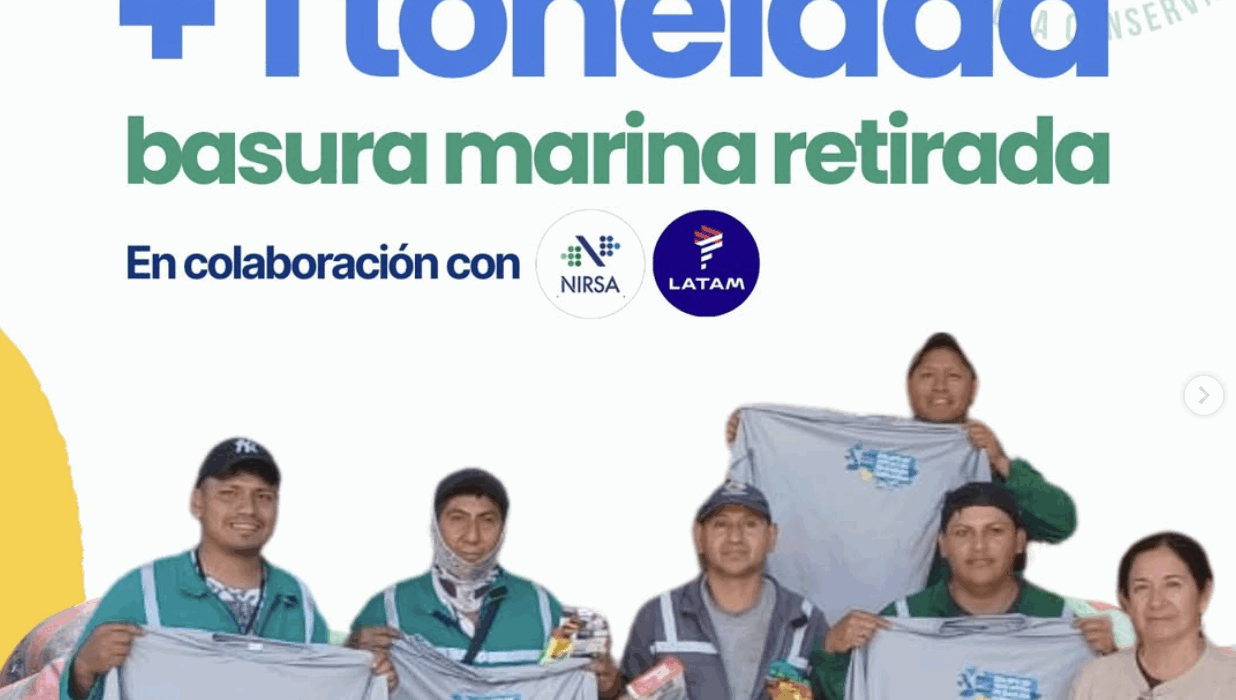
La iniciativa Cuidando Galápagos, desarrollada en colaboración con NIRSA y LATAM Airlines, logró un importante hito en la protección de los ecosistemas marinos: más de 1 tonelada de basura marina retirada en las Islas Galápagos.
👥 Gracias al esfuerzo de 309 voluntarios, se recorrieron más de 39 km en Floreana, Santa Cruz y San Cristóbal, retirando plásticos y desechos que representan una amenaza para la biodiversidad de uno de los lugares más emblemáticos del planeta.
♻️ Como parte de esta acción, 56 kg de botellas plásticas ya fueron compactadas y tendrán una segunda vida mediante procesos de reciclaje, demostrando que la colaboración entre empresas, organizaciones y comunidades puede transformar residuos en oportunidades.
💪 En TUNACONS creemos que cada kilo cuenta para lograr un océano más limpio y comunidades costeras más fuertes.
👉 Te invitamos a sumarte al próximo recorrido y ser parte activa del cambio hacia un futuro más sostenible. 🌎💙
Over One Ton of Marine Debris Removed in Galápagos with the “Caring for Galápagos” Initiative
The Caring for Galápagos initiative, carried out in partnership with NIRSA and LATAM Airlines, has achieved a major milestone in marine conservation: over one ton of marine debris was removed in the Galápagos Islands.
👥 With the support of 309 volunteers, more than 39 km were covered in Floreana, Santa Cruz, and San Cristóbal, removing plastics and waste that threaten the biodiversity of one of the world’s most iconic ecosystems.
♻️ As part of this effort, 56 kg of plastic bottles have already been compacted and will be given a second life through recycling, showing how collaboration between companies, organizations, and communities can turn waste into opportunities.
💪 At TUNACONS, we believe that every kilo counts towards achieving a cleaner ocean and stronger coastal communities.
👉 Join us in the next clean-up and be part of the change for a more sustainable future. 🌎💙
Mehr als eine Tonne Meeresmüll auf den Galápagos-Inseln entfernt – Dank der Initiative „Cuidando Galápagos“
Die Initiative „Cuidando Galápagos“, in Zusammenarbeit mit NIRSA und LATAM Airlines, hat einen bedeutenden Beitrag zum Schutz der Meeresökosysteme geleistet: Über eine Tonne Meeresmüll wurde auf den Galápagos-Inseln entfernt.
👥 Mit dem Einsatz von 309 Freiwilligen wurden mehr als 39 km auf Floreana, Santa Cruz und San Cristóbal zurückgelegt, um Plastik und Abfälle zu beseitigen, die die einzigartige Artenvielfalt dieser weltberühmten Inseln bedrohen.
♻️ Im Rahmen dieser Aktion wurden bereits 56 kg Plastikflaschen gepresst und erhalten durch Recycling ein zweites Leben. Dies zeigt, wie die Zusammenarbeit von Unternehmen, Organisationen und Gemeinden Abfälle in Chancen verwandeln kann.
💪 Bei TUNACONS sind wir überzeugt, dass jedes Kilo zählt, um sauberere Ozeane und stärkere Küstengemeinden zu schaffen.
👉 Machen Sie bei der nächsten Sammelaktion mit und werden Sie Teil des Wandels hin zu einer nachhaltigeren Zukunft. 🌎💙
En el marco del primer periodo de veda del atún 2025, realizamos el Taller de Fortalecimiento de Capacidades para Tripulantes, un espacio de aprendizaje y reflexión que reunió a expertos nacionales e internacionales con un objetivo común: asegurar una flota más responsable y sostenible.
Durante la jornada, se abordaron temas clave para la gestión pesquera y la conservación marina, entre ellos: ✔ Dinámica poblacional de especies objetivo en el OPO. ✔ Medidas de conservación de túnidos y especies vulnerables 2026-2028. ✔ Esfuerzo pesquero y distribución de capturas. ✔ Manejo y recuperación de FADs. ✔ Buenas prácticas de manipulación y liberación (BPML). ✔ Implementación de FADs 100% biodegradables. ✔ Procesos formativos para personal pesquero.
El taller contó con la participación de expositores de TUNACONS, CIAT, SRP, EPESPO y más, quienes compartieron sus conocimientos, experiencias y propuestas para avanzar hacia una pesca más responsable.
🙌 Agradecemos a todos los participantes y organizaciones aliadas que hicieron posible este espacio de fortalecimiento colectivo, que refuerza la cooperación y la responsabilidad compartida.
📈 En TUNACONS reafirmamos nuestro compromiso por una flota sostenible, un océano más sano y comunidades pesqueras fortalecidas.
Strengthening Capacities during the 2025 Tuna Closure Period
As part of the first tuna closure period of 2025, we held the Capacity-Building Workshop for Crew Members, a space for learning and dialogue that brought together national and international experts with a shared goal: ensuring a more responsible and sustainable fleet.
The workshop addressed key topics for fisheries management and marine conservation, including: ✔ Population dynamics of target species in the EPO. ✔ Conservation measures for tunas and vulnerable species 2026–2028. ✔ Fishing effort and catch distribution. ✔ FAD management and recovery. ✔ Best practices for handling and safe release (BPML). ✔ Implementation of 100% biodegradable FADs. ✔ Training processes for fishing personnel.
Presentations were delivered by experts from TUNACONS, IATTC, SRP, EPESPO and others, who shared their knowledge, experiences, and proposals to advance responsible tuna fishing.
🙌 We thank all participants and partner organizations for their valuable contributions, which made this collective capacity-building effort possible.
📈 At TUNACONS, we reaffirm our commitment to a sustainable fleet, a healthier ocean, and stronger fishing communities.
Stärkung der Kapazitäten im Rahmen der Thunfisch-Schonzeit 2025
Im Rahmen der ersten Thunfisch-Schonzeit 2025 führten wir den Workshop zur Kapazitätsstärkung für Besatzungsmitglieder durch – ein Raum für Lernen und Austausch, in dem nationale und internationale Experten zusammenkamen, um ein gemeinsames Ziel zu verfolgen: eine verantwortungsvollere und nachhaltigere Flotte.
Während der Veranstaltung wurden zentrale Themen für Fischereimanagement und Meeresschutz behandelt, darunter: ✔ Populationsdynamik der Zielarten im OPO. ✔ Erhaltungsmaßnahmen für Thunfische und gefährdete Arten 2026–2028. ✔ Fischereiaufwand und Fangverteilung. ✔ Management und Rückgewinnung von FADs. ✔ Gute Praktiken für Handhabung und sichere Freilassung (BPML). ✔ Einführung von 100 % biologisch abbaubaren FADs. ✔ Ausbildungsprozesse für Fischereipersonal.
Zu den Referenten gehörten Vertreter von TUNACONS, CIAT, SRP, EPESPO und weiteren Institutionen, die ihr Wissen, ihre Erfahrungen und Vorschläge für eine verantwortungsvollere Thunfischerei teilten.
🙌 Wir danken allen Teilnehmern und Partnerorganisationen, die diesen kollektiven Stärkungsprozess möglich gemacht haben.
📈 TUNACONS bekräftigt damit sein Engagement für eine nachhaltige Flotte, gesündere Ozeane und gestärkte Fischereigemeinschaften.
En la industria atunera sabemos que nuestra responsabilidad va más allá de capturar atún. Cuidar el océano y su ecosistema es nuestra verdadera misión.
Desde TUNACONS impulsamos iniciativas que buscan evitar que los plásticos lleguen al mar y a las playas, trabajando de la mano con comunidades, autoridades, pescadores artesanales e instituciones aliadas.
En Galápagos, a través del programa Cuidando Galápagos, se han retirado 1,7 toneladas de residuos en Santa Cruz, San Cristóbal e Isabela.
En el Golfo de Guayaquil, con la iniciativa Pescando Plásticos, más de 300 voluntarios han logrado retirar 146,8 toneladas de plásticos de los manglares desde 2021.
Cada bolsa recogida, cada playa limpia y cada voluntario nos recuerdan que juntos podemos lograr un océano más sano y comunidades costeras más fuertes.
Beyond Fishing: Commitment to a Cleaner Ocean and Stronger Communities
In the tuna industry, we understand that our responsibility goes far beyond catching tuna. Caring for the ocean and its ecosystems is at the core of our mission.
At TUNACONS, we lead initiatives to prevent plastics from reaching the sea and the beaches, working hand in hand with communities, authorities, artisanal fishers, and partner organizations.
In Galapagos, through the Caring for Galapagos program, we have removed 1.7 tons of waste from Santa Cruz, San Cristóbal, and Isabela.
In the Gulf of Guayaquil, with the Fishing for Plastics initiative, more than 300 volunteers have removed 146.8 tons of plastics from mangroves since 2021.
Each bag collected, each beach cleaned, and each volunteer reminds us that together we can achieve healthier oceans and stronger coastal communities.
Über die Fischerei hinaus: Engagement für saubere Ozeane und starke Gemeinschaften
In der Thunfischindustrie wissen wir, dass unsere Verantwortung weit über den Fang von Thunfisch hinausgeht. Der Schutz des Ozeans und seiner Ökosysteme ist unsere eigentliche Aufgabe.
TUNACONS setzt Initiativen um, die verhindern, dass Plastik ins Meer und an die Strände gelangt – in enger Zusammenarbeit mit Gemeinden, Behörden, handwerklichen Fischern und Partnerorganisationen.
Auf den Galápagos-Inseln wurden im Rahmen des Programms Galápagos schützen1,7 Tonnen Abfälle in Santa Cruz, San Cristóbal und Isabela entfernt.
Im Golf von Guayaquil haben mehr als 300 Freiwillige durch die Initiative Plastikfischen seit 2021 146,8 Tonnen Plastik aus den Mangroven gesammelt.
Jeder gesammelte Sack, jeder gesäuberte Strand und jeder Freiwillige erinnert uns daran, dass wir gemeinsam gesündere Ozeane und stärkere Küstengemeinschaften erreichen können.
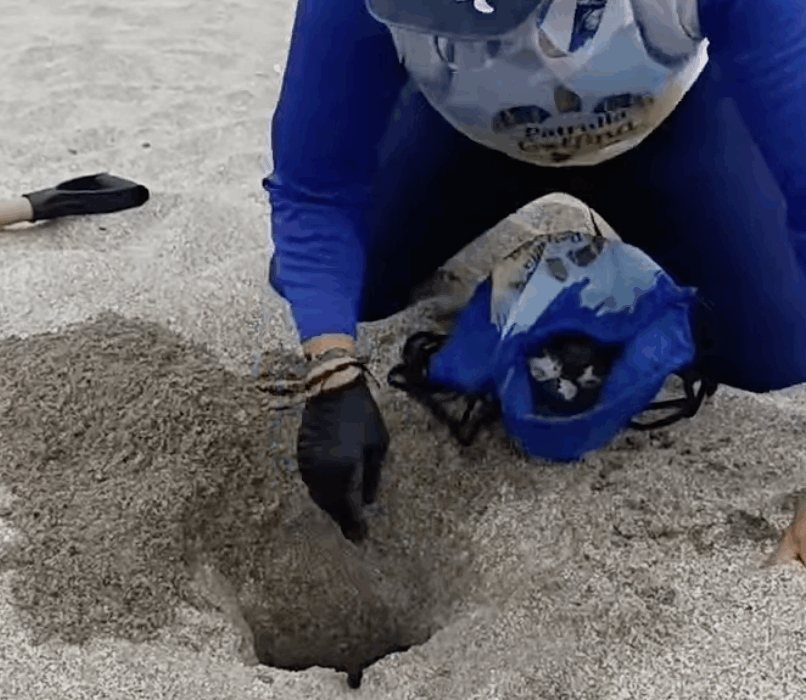
Gracias a lo recaudado en la carrera #NirsaOceanRun y al programa Net Positiva, impulsado por NIRSA, Bureo y TUNACONS, hoy es posible fortalecer la protección de tortugas marinas en las costas de Manabí.
Estos fondos han permitido mejorar la movilidad de los equipos que monitorean playas, facilitando el transporte de materiales y reduciendo el tiempo necesario para llegar a las zonas de anidación. Además, gracias al apoyo de WildAid Latino, se cuenta con herramientas de señalización y protección de nidos, lo que asegura un entorno más seguro para las crías de tortugas.
La capacitación de voluntarios comunitarios también ha sido clave: cada vez más personas se suman a esta noble labor, aprendiendo a proteger nidos y a liberar tortugas de manera responsable.
El impacto es tangible: más nidadas protegidas significan más neonatos alcanzando el océano y contribuyendo a la conservación de estas especies vulnerables.
En TUNACONS celebramos estas iniciativas que integran a la comunidad, las empresas y las organizaciones en un esfuerzo conjunto por la conservación marina. 💙🐢🌊
Protecting Sea Turtles Through Community Support and Partnership with NIRSA
Thanks to the funds raised during the #NirsaOceanRun and the Net Positiva program, led by NIRSA, Bureo, and TUNACONS, it is now possible to strengthen sea turtle conservation along the coasts of Manabí.
These resources have improved the mobility of monitoring teams, making it easier to transport materials and reach nesting beaches in less time. With the support of WildAid Latino, additional tools are now available for nest marking and protection, ensuring safer conditions for hatchlings.
Community volunteers have also played a vital role. More and more people are learning how to protect nests and safely release turtles, creating a ripple effect of awareness and stewardship.
The results are clear: more protected nests mean more hatchlings making their way safely to the ocean, helping secure the survival of these vulnerable species.
At TUNACONS, we proudly celebrate these initiatives that bring together communities, companies, and organizations to work hand in hand for marine conservation. 💙🐢🌊
Schutz der Meeresschildkröten durch Gemeinschaftsunterstützung und Partnerschaft mit NIRSA
Dank der im Rahmen des #NirsaOceanRun gesammelten Mittel und des Programms Net Positiva, das von NIRSA, Bureo und TUNACONS unterstützt wird, kann der Schutz der Meeresschildkröten an den Küsten von Manabí weiter gestärkt werden.
Die Finanzierung hat die Mobilität der Überwachungsteams verbessert, den Transport von Materialien erleichtert und den Zugang zu den Niststränden beschleunigt. Mit der Unterstützung von WildAid Latino stehen nun zusätzliche Hilfsmittel für die Markierung und den Schutz von Nestern zur Verfügung, sodass die Jungtiere sicherere Bedingungen vorfinden.
Auch ehrenamtliche Helfer aus der Gemeinschaft spielen eine entscheidende Rolle. Immer mehr Menschen engagieren sich, lernen den Schutz von Nestern und die verantwortungsvolle Freilassung der Schildkröten.
Die Wirkung ist deutlich: mehr geschützte Nester bedeuten mehr Jungtiere, die sicher das Meer erreichen und so zum Erhalt dieser gefährdeten Arten beitragen.
Bei TUNACONS feiern wir diese Initiativen, die Gemeinschaften, Unternehmen und Organisationen vereinen, um gemeinsam den Meeresschutz voranzutreiben. 💙🐢🌊
Panama, September 2025 — The TUNACONS Foundation once again made an impactful appearance at the 103rd Meeting of the Inter-American Tropical Tuna Commission (IATTC), held from September 1 to 5 in Panama City. Drawing delegates from across the region, this year’s gathering focused on safeguarding ocean health and advancing sustainable fisheries in the Eastern Tropical Pacific—a mission central to TUNACONS’ vision.
Why the IATTC matters: The IATTC serves as the chief regional body for managing tuna and associated marine species from California to South America under the Antigua Convention. It is responsible for establishing science-based conservation measures, enforcing regulations, and promoting sustainable fisheries practices across member nations. At this 103rd meeting, key decisions on the agenda include:
Reviewing staff proposals on stock status, management recommendations for 2024, and the IATTC Strategic Science Plan for 2026–2030 Newsroom Panama+15IATTC+15IATTC+15.
Strengthening the Ecosystem Approach to Fisheries Management (EAFM) framework, to ensure holistic, precautionary stewardship of marine ecosystems IATTC+1.
TUNACONS’ triumph: During this vital gathering, TUNACONS successfully hosted a parallel side event that generated enthusiasm and curiosity among delegates from member nations. It provided a platform to showcase sustainable fisheries innovations and promote collaborative dialogue.
A highlight of the event was the renewal of the Memorandum of Understanding between TUNACONS and the Panamanian Authority for Aquatic Resources (ARAP). The renewed agreement reinforces public-private cooperation across multiple critical areas:
Science-based fisheries management
Monitoring and traceability systems
Technical training and capacity building
Information exchange for audits and compliance with regional measures
This collaboration builds governance capacity, accelerates the implementation of Marine Stewardship Council (MSC) certification, boosts market access, and enhances the sustainability of Panama’s purse-seine tuna fleet.
The outcome: High participation and engagement at the side event reaffirmed TUNACONS’ emerging leadership in science-driven cooperatives and best practices in responsible fishing. This renewed agreement with ARAP underlines our shared mission—with governments, regional bodies, and communities—to ensure tuna fisheries remain a source of food, employment, and development without compromising ocean health.
Panamá, septiembre de 2025 — La Fundación TUNACONS tuvo una destacada participación en la 103ª Reunión de la Comisión Interamericana del Atún Tropical (CIAT), realizada del 1 al 5 de septiembre en la ciudad de Panamá. Este encuentro, que reúne a delegados de gobiernos, organismos internacionales, ONGs y el sector pesquero, es clave para definir medidas de conservación y gestión sostenible de las pesquerías de atunes en el Océano Pacífico Oriental.
La importancia de la CIAT: La CIAT es la principal organización regional encargada de regular y conservar los atunes y especies asociadas en el Pacífico Oriental Tropical, bajo la Convención de Antigua. En su 103ª reunión, los países miembros discuten y adoptan medidas fundamentales como:
La aprobación de procedimientos de manejo (harvest strategies) para el atún barrilete, aleta amarilla y patudo, que aseguren la sostenibilidad de las poblaciones en el largo plazo.
La revisión de las recomendaciones científicas sobre el estado de los recursos y el Plan Estratégico de Ciencia de la CIAT 2026–2030.
El fortalecimiento del Enfoque Ecosistémico de Manejo Pesquero (EAFM), que incorpora criterios de conservación de la biodiversidad y adaptación al cambio climático.
Éxito de TUNACONS: En este marco, TUNACONS organizó un evento paralelo que despertó gran interés entre los delegados, quienes conocieron de primera mano las innovaciones y avances de la organización en materia de sostenibilidad pesquera.
El momento más destacado fue la renovación del Memorando de Entendimiento entre la Fundación TUNACONS y la Autoridad de Recursos Acuáticos de Panamá (ARAP). Este acuerdo fortalece la cooperación público-privada en aspectos prioritarios como:
Gestión pesquera basada en ciencia.
Monitoreo y trazabilidad de la flota atunera.
Capacitación técnica y fortalecimiento de capacidades.
Intercambio de información para auditorías y cumplimiento de medidas regionales.
Con esta alianza, se impulsa la gobernanza pesquera, se optimizan las condiciones para avanzar en la certificación del Marine Stewardship Council (MSC), se mejora el acceso a mercados internacionales exigentes y se construyen mecanismos para reducir el impacto ambiental de la pesca.
Conclusión: La activa participación de TUNACONS en la CIAT 103 y la renovación del acuerdo con ARAP reflejan su compromiso de seguir trabajando junto a gobiernos, científicos y comunidades pesqueras en favor de una industria atunera sostenible, responsable y con futuro para las próximas generaciones.